



Contact Us Make a payment Check In

Why Play Is One of the Best Ways to Build Your Child’s Language Skills

When many people think of speech therapy, they imagine flashcards, drills, or sitting at a table practicing speech sounds. In reality, one of the most effective and meaningful ways children learn to communicate is through something they already love, play.

Play is natural. It’s how children explore their world, build relationships, solve problems, and express themselves. For children who struggle with speech and language skills, play provides a low-pressure, highly motivating environment where communication can develop organically and joyfully.

Let’s explore why play is so powerful in speech therapy, how play-based interventions work, and how families can support language development at home. We’ll also share how Carolina Therapy Connection can partner with your family every step of the way.

Why Play Is the Foundation of Speech Therapy

At its core, play is a meaningful and purposeful activity that supports children’s cognitive, social, emotional, and language development. In speech therapy, play creates natural opportunities for children to practice:

  • Turn-taking
  • Problem-solving
  • Sequencing
  • Expressive and receptive language

Research supports the value of play in therapy. As noted by Elbeltagi et al. (2023), play promotes problem-solving, emotional intelligence, social interaction, and skill integration, all essential components of communication development. When children learn language through fun, natural interactions, they are more likely to generalize skills across environments, meaning they use new words and strategies at home, school, and in the community.

Most importantly, play nurtures connection. When children feel engaged and safe, their brains are more open to learning. Play builds trust, confidence, and motivation, key ingredients for communication growth.

Elbeltagi, Reem, et al. “Play Therapy in Children with Autism: Its Role, Implications, and Limitations.” World Journal of Clinical Pediatrics, 2023.

How Play-Based Speech Therapy Works

Play-based speech therapy isn’t “just playing.” It is intentional, strategic, and grounded in child-development research.

As one of our therapists shares:

“Most times during play therapy, I find myself on the floor, at the same level as the child. It’s important to make the child feel in charge while you’re there for support and interaction. Play only works if the child feels interested and free from expectations.”

Here’s how speech-language pathologists use play to support communication:

Following the Child’s Lead

Therapists observe what the child is interested in and join their play to create shared interaction. When children feel motivated, they are more likely to attempt communication naturally.

Language in Everyday Moments

Rather than drilling vocabulary, therapists model language within play, such as:

  • Saying “Ready, set, go!” while blowing bubbles
  • Modeling “open,” “help,” or “more” using ASL during pretend cooking
  • Using action words like jump, crash, or fall down with toy cars
  • Repeating foundational words like go, stop, and get

Children learn best when they hear words repeated in meaningful contexts.

Modeling Without Pressure

Instead of asking a child to “say this,” therapists model words and wait. Children may imitate, attempt their own version, gesture, or simply observe, all of which support healthy language learning.

Building Social Communication Through Play

Play naturally supports essential social skills, including:

  • Turn-taking (“my turn,” “your turn”)
  • Joint attention (sharing focus on an activity)
  • Problem-solving (“Uh-oh, it’s stuck!”)
  • Emotional expression (“That made you feel excited/frustrated/sad.”)

Using Play for Speech Sound Practice

Play offers natural opportunities to practice speech sounds, such as:

  • “P” while popping bubbles
  • “S” while making snake sounds

Because children are having fun, repetition feels effortless and engaging.

Examples of Play-Based Speech Therapy Activities

  • Pretend play: restaurant, doctor, vet, grocery store
  • Movement play: obstacle courses, swings, ball games
  • Sensory play: Play-Doh, kinetic sand, Pop-It boards
  • Construction play: blocks, train tracks, magnetic tiles
  • Cause-and-effect play: bubbles, ramps, and cars, wind-up toys

These activities support vocabulary, sentence structure, articulation, and social communication skills.

Tips for Supporting Play and Language at Home

  • Get face-to-face so your child can see facial expressions and lip movements
  • Repeat words, often children learn through repetition
  • Use simple language that matches your child’s developmental level
  • Pause frequently to allow your child time to respond
  • Let your child choose activities, even if it’s not what you planned
  • Add one new element at a time (a word, step, or action)
  • Celebrate all communication attempts, including gestures and sounds

Small, consistent moments of playful interaction can make a big impact over time.

The Big Takeaway

Play is far from meaningless; it is a powerful, research-backed tool for language development. Through play, children build confidence, strengthen relationships, and learn to communicate in authentic and joyful ways. When speech therapy is grounded in connection and fun, children stay motivated, curious, and empowered.

How Carolina Therapy Connection Can Help

At Carolina Therapy Connection, our expert team, including speech, occupational, and physical therapists, mental wellness providers, and educational specialists, uses play-based, child-centered therapy to support every child’s unique development.

We create individualized plans that meet children where they are, making therapy engaging, meaningful, and effective.

Ready to get started? Contact our team to schedule an evaluation and find the right services for your child. We’re here to help your child grow, communicate, and thrive. 💙


St. Patrick’s Day Speech Activities: Fun Ways to Practice Speech Sounds at Home

Celebrate St. Patrick’s Day with playful, engaging speech and language activities you can do right at home! These festive, low-prep ideas help support speech sound development, listening skills, and language growth all while keeping learning fun and motivating for kids.

Whether your child is working on specific speech sounds or needs extra practice, these St. Patrick’s Day–themed activities make speech practice feel like a game instead of work.

Why Holiday-Themed Speech Play Works

Seasonal and holiday-themed activities naturally boost children’s motivation and participation. When kids are excited and engaged, they’re more willing to:

  • Practice target sounds
  • Try new words
  • Repeat activities without frustration

St. Patrick’s Day offers the perfect opportunity to incorporate green-themed play, pretend games, and simple household materials into everyday speech practice without added pressure.

St. Patrick’s Day Speech Sound Activities

🍀 Lucky Hunt for Speech Words

Turn speech practice into a scavenger hunt!

  • Hide green objects (blocks, pom-poms, paper circles, toys) around the house
  • Each time your child finds an object, they practice a target sound or word
  • Assign different sounds to different objects
    • Green blocks = /k/

    • Gold coins = /g/

Skills supported: articulation, sound discrimination, repetition

🌈 Rainbow Race Art

Create a colorful rainbow while practicing speech sounds.

  • Use crayons, markers, paint, or torn paper
  • Assign each color a speech sound
  • Practice a word 3–5 times before adding that color to the rainbow

Example sound mapping:

  • Red – /t/
  • Orange – /s/
  • Yellow – /k/
  • Green – /r/
  • Blue – /l/
  • Purple – your child’s target sound

Skills supported: sound production, sequencing, motivation

🪙 Pot of Gold Sound Sort

Practice sounds while sorting words.

  • Use a small container as a “pot of gold.”
  • Write target words on gold circles (paper or foil)
  • Sort words by beginning, middle, or final sounds
  • Say each word as it goes into the pot

Skills supported: phonological awareness, articulation, categorization

🍀 Leprechaun Listening Game

Pretend to be a silly leprechaun giving fun directions.

  • “Touch your green shoe before you say your /sh/ word!”
  • “Hop like a frog, then say your /f/ word!”

This activity supports speech sound practice, following directions, and motor planning.

✨ Make a Magic Speech Wand

Add a little “magic” to speech practice.

  • Create a simple wand using a straw and a paper star
  • Tap the wand on a picture or object as your child practices their sound
  • Use “magic words” that include their target sound

Skills supported: repetition, engagement, expressive language

🌈 St. Patrick’s Day Speech Practice Worksheet

Customize your child’s speech practice with this simple, themed worksheet.

1. My Target Sound:


2. Practice Words (5–10):


3. Rainbow Sentences
Create a silly sentence using at least three practice words:

4. Gold Coin Challenge
Say each word 5 times. Draw a coin for every repetition!
○ ○ ○ ○ ○

5. Leprechaun Silly Practice
Try practicing your word while:

  • Whispering like a sneaky leprechaun
  • Saying it loudly like you found treasure
  • Using a robot voice
  • Tapping a “magic wand”

How Can Carolina Therapy Connection Help?

Holiday-themed activities are a fun way to encourage speech practice, but if your child continues to struggle with speech sound clarity, language development, or communication skills, additional support may be helpful.

At Carolina Therapy Connection, our licensed speech-language pathologists use play-based, child-centered therapy to help children build confident communication skills in ways that feel fun, motivating, and meaningful. Therapy plans are individualized to meet each child’s unique strengths and needs.

If you have concerns about your child’s speech or language development or want guidance on supporting them at home, we’re here to help.

👉 Contact us to learn more about our speech therapy services or to schedule an evaluation today.

Feeding Tube Awareness: Inclusive Mealtimes for Children

Written by: Qiana Jones, COTA/L 

Feeding Tube Awareness Week offers an opportunity to raise understanding, reduce stigma, and celebrate children who receive nutrition through feeding tubes. At Carolina Therapy Connection, we believe feeding is about more than intake… It’s about connection, participation, dignity, and honoring each child’s unique needs.

From an occupational therapy perspective, the use of feeding tubes does not represent a failure. They serve as supportive medical tools that help children grow, conserve energy, and engage more fully in daily life.

Understanding Tube Feeding Through an Occupational Therapy Lens

Children may require feeding tubes for many reasons, including:

  • Medical complexity
  • Sensory processing differences
  • Oral-motor or swallowing challenges
  • Difficulty regulating during mealtimes

Tube feeding can:

  • Support adequate nutrition and hydration
  • Reduce stress and pressure around eating
  • Allow children to focus energy on play, learning, and development

Some tube-fed children also eat by mouth, while others do not, and both experiences are VALID. As occupational therapists, we focus on safety, regulation, and meaningful participation, rather than forcing a single feeding outcome.

Creating Inclusive Mealtimes at Home

Family meals can remain meaningful and inclusive, even when the way we feed looks different.

🍽️ Togetherness Matters More Than Sameness

Children do not need to eat the same way to belong at the table. Sitting together, participating in routines, and sharing conversation reinforces connection and a sense of belonging.

🧃 Normalize Tube Feeding Within Daily Routines

When appropriate, families can include tube feeds during shared mealtimes rather than separating them. This approach helps normalize tube feeding and reduces feelings of difference or isolation.

Having Healthy Conversations About Tube Feeding

How adults talk about tube feeding shapes how children understand their bodies and needs.

💬 Use Neutral, Confident Language

Supportive phrases may include:

  • “This is how your body gets the nutrition it needs.”
  • “Everyone’s body works differently.”

Avoid language that frames tube feeding as something to “fix” or apologize for.

🌱 Welcome Curiosity

Siblings, peers, and adults often have questions. Simple, factual responses help normalize tube feeding and reduce stigma:

  • “This helps their body grow strong.”

Feeding Is About More Than Food

From an occupational therapy perspective, feeding involves more than eating. It includes:

  • Sensory processing
  • Motor coordination
  • Emotional regulation
  • Past experiences
  • Feelings of safety and trust

For some children, oral feeding feels overwhelming—or may not be safe. Tube feeding allows the nervous system to regulate, so exploration, if and when appropriate, can happen without pressure.

Progress may look like:

  • Reduced anxiety at meals
  • Increased tolerance of food-related experiences
  • Longer participation at the table
  • Improved family routines

These gains matter, and they deserve recognition and celebration.

Supporting Families With Compassion

Families of tube-fed children often navigate:

  • Emotional stress
  • Conflicting advice
  • Social pressure
  • Fear of judgment

Choosing tube feeding reflects care, advocacy, and responsiveness to a child’s needs, NOT a lack of effort. Families deserve support grounded in empathy and respect.

How Can Carolina Therapy Connection Help?

Our occupational therapy team supports:

  • Inclusive, child-centered mealtime routines
  • Individual feeding journeys without judgment
  • Family partnership grounded in compassion
  • Dignity, understanding, and meaningful participation

Feeding tubes help children THRIVE… not just survive.
If you have questions about feeding, regulation, or participation at mealtimes, our occupational therapy team is here to help.

Schedule your free consultation by clicking here.

7 Sweet Valentine’s Day Activities to Build Speech & Language Skills

Valentine’s Day isn’t just about candy hearts and classroom cards; it’s also a perfect opportunity to support your child’s speech and language development through play, creativity, and connection. Seasonal themes naturally spark conversation, motivation, and emotional engagement, making learning feel fun and meaningful.

These seven Valentine’s Day-themed activities are simple to set up, easy to adapt, and designed to grow vocabulary, social communication, speech sounds, and storytelling skills, all while keeping things festive and joyful.

Why Valentine’s Day Is Perfect for Language Development

Holiday routines introduce new words, emotions, and shared experiences. Valentine’s Day activities encourage children to:

  • Talk about feelings and relationships
  • Practice turn-taking and social language
  • Follow directions and sequence steps
  • Expand sentences and expressive language

With intentional modeling and play, everyday moments can become powerful learning opportunities.

7 Sweet Valentine’s Day Speech & Language Activities

❤️ 1. Valentine Card Conversations

Materials Needed

  • Blank cards or construction paper
  • Markers, crayons, paint
  • Stickers or heart cutouts
  • Envelopes (optional)
  • Visual phrase list (optional)


How It Builds Language
Creating and delivering Valentine’s cards promotes:

  • Requesting (“Can I have the red marker?”)
  • Describing (“This card has glittery hearts.”)
  • Social language (“Thank you!” “Happy Valentine’s Day!”)


Offer sentence starters like “I made this for…” or “I like your card because…” to support phrasing and confidence.

💌 2. Valentine Vocabulary Hunt

Materials Needed

  • Paper or foam hearts in different colors or sizes
  • Stickers, small toys, or themed objects
  • A basket or a bag for collecting
  • Sorting mats (optional)


How It Builds Language
This scavenger-hunt style game supports:

  • Spatial concepts (“under,” “next to,” “behind”)
  • Descriptive language (color, size, texture)
  • Following directions (“Find two small red hearts.”)


Encourage your child to explain where they found each item to boost expressive language.

🍫 3. Sweet Treat Sequencing

Materials Needed

  •  Simple Valentine recipe ingredients
    (examples: strawberries + melted chocolate, heart-shaped toast, graham crackers + frosting)
  • Bowl and spoon
  • Printable sequencing chart (optional)
  • Wipes or a cloth for cleanup


How It Builds Language
Cooking together helps children practice:

  • Sequencing (“First… next… last…”)
  • Predicting outcomes
  • Retelling events
  • Following multi-step directions


Ask your child to teach you the steps afterward for extra narrative practice.

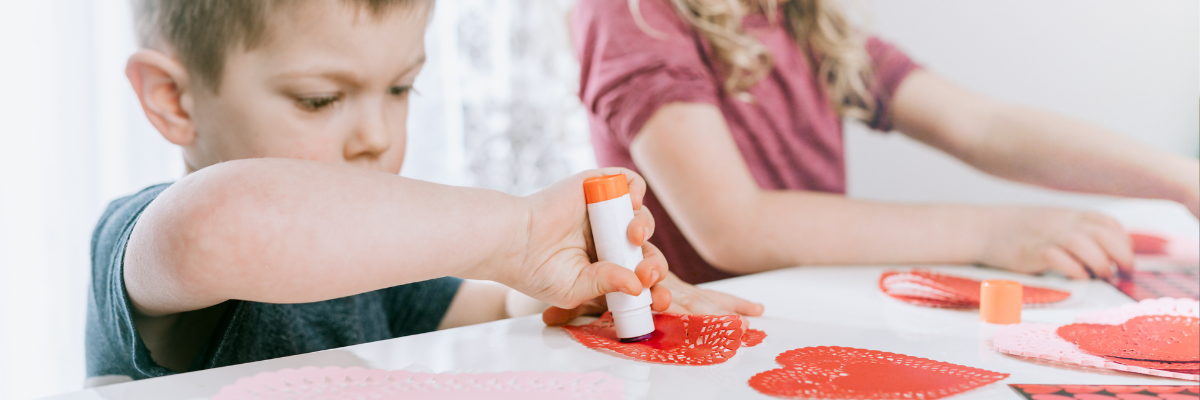
💖 4. Heart-Themed Art Craft

Materials Needed

  • Construction paper
  • Glue or glue sticks
  • Scissors
  • Markers, crayons, glitter, stickers
  • Googly eyes or heart templates (optional)


How It Builds Language
Crafting encourages:

  • Describing actions and materials
  • Turn-taking (“Your turn with the scissors.”)
  • Requesting supplies


If your child reaches for an item, model language such as:
“I see you reaching for the glue. We say, ‘I want the glue, please.’”

Narrate their actions to model expanded language: “You’re cutting a big pink heart!”

🥰 5. Valentine Feelings Game

Materials Needed

  • Paper hearts
  • Marker
  • Bowl or bag
  • Emotion pictures (optional)


How It Builds Language
Talking about feelings supports:

  • Emotional vocabulary (happy, excited, frustrated, nervous)
  • Social communication
  • Perspective-taking
  • Conversation skills


Ask follow-up questions like: “What makes you feel excited?” or “How can you help a friend who is sad?”

💘 6. Conversation Hearts… With a Twist

Materials Needed

  • Conversation heart candies or paper hearts with phrases
  • Bowl or container
  • Blank hearts for creating new phrases (optional)


How It Builds Language
Using phrases as conversation starters boosts:

  • Social language
  • Turn-taking
  • Topic maintenance
  • Flexible thinking


Try prompts like: “Another way to say ‘Be Mine’ is…”

💞 7. “Love Is…” Language Expansion Activity

Materials Needed

  • Paper heart cutouts
  • Markers
  • Poster board or wall space
  • Photos or magazine cutouts (optional)


How It Builds Language
Completing the sentence “Love is…” encourages:

  • Sentence expansion
  • Vocabulary growth
  • Storytelling
  • Emotional insight


If your child says, “Love is giving hugs,” you might expand:
“We give hugs to people we love because we’re happy to see them.”

Final Thoughts

Connection is at the heart of both Valentine’s Day and strong communication skills. With simple materials and intentional language modeling, these festive activities can nurture your child’s speech and language development while creating meaningful moments together. Try a few this February and watch their communication skills blossom.

Winter Wiggles: 5 Easy Indoor Activities to Help Kids Burn Energy

Physical activity is key to maintaining a healthy lifestyle for kids of all ages. School-age kiddos may have some extra wiggles this winter due to changes in their routine during school breaks. The cooler weather may also make it difficult to play outside. Here are 5 easy activities to try at home to help maintain a healthy lifestyle and provide an opportunity to get those wiggles out!

1. The Floor is Lava

Place extra pillows, blankets, chairs, small rugs, or small stepping stones on the floor. Have your child try to move from one side of the room to the other while stepping only on these objects and avoiding the floor. You can add an extra challenge by having them collect 10 times from around the room before a timer goes off. 

2. Rock, Tree Bridge

Get the whole family involved! Start standing in a line. The first person steps forward and becomes a rock. (Sit on the floor, bringing your knees near your chest). The second person has to jump (or safely step) over the rock and become a tree. (Stand up nice and tall with their arms out wide). The third person has to jump over the rock, spin around the tree, and become a bridge. (Place arms and feet on the floor, in the downward dog position). The fourth person has to jump over the rock, go around the tree, and crawl under the bridge to become another rock. This pattern continues until the entire family reaches the other side of the room. 

3. Simon Says

Take turns trying out different yoga positions, hopping sequences, or animal walks. Each person can take a turn playing Simon. 

4. Animal Walks

Try walking like a penguin, bear, or slithering like a snake. The opportunities are endless, with lots of animals or objects to mimic. You can encourage races down a hallway or around furniture in the room. 

5. Musical Movement

Play your favorite songs. When the music plays, dance, dance, dance! When the music pauses, freeze in the current dance position. It can be even more fun with a dance leader. Let your child choose a song and try to copy their dance moves! Take turns leading and following.

How can Carolina Therapy Connection Help?

If you notice your child is having difficulty using both sides of their body, crossing midline, or keeping their balance, they may need some additional support. Reach out to Carolina Therapy Connection to see if Physical Therapy may help. If your child already receives Physical Therapy, ask their therapist how to customize these activities to support your child more specifically.

How Sleep Impacts Mental Wellbeing: The Essential Connection Between Rest and Emotional Health

In today’s fast-paced world, sleep often feels like a luxury rather than a necessity. Late-night scrolling, demanding work schedules, and constant stimulation make it easy to push bedtime later and later. But sleep isn’t just a way to recharge physically — it’s one of the most powerful tools we have for maintaining mental health and emotional balance. 

The Powerful Connection Between Sleep and Mental Health

Sleep and mental well-being are connected in many ways. During sleep, especially in the deeper REM (Rapid Eye Movement) stages, our brains process emotions, consolidate memories, and clear out neurotoxic waste — all essential for cognitive functioning and emotional regulation. 

Lack of sleep can throw off this delicate balance. Just one night of poor sleep can make you feel irritable, anxious, and unfocused. Over time, chronic sleep deprivation can contribute to the development or worsening of mental health disorders, including depression, anxiety, and even bipolar disorder. 

How Sleep Affects Mood and Emotional Resilience

Have you ever noticed how everything feels a bit more overwhelming after a restless night? That’s because sleep plays a crucial role in regulating our mood. The amygdala is the part of the brain responsible for processing emotions; this area becomes more reactive when we’re sleep-deprived. This means we’re more likely to overreact to stressors or feel emotionally unstable. 

Sleep helps us “reset” the emotional brain, giving us the resilience we need to face daily challenges. With adequate rest, we become better equipped to manage stress, resolve conflicts, and maintain a positive outlook. 

Anxiety and Sleep: Breaking the Vicious Cycle

The relationship between anxiety and sleep can be complex. Anxiety can make it hard to fall or stay asleep, and not getting enough sleep can, in turn, increase anxiety levels. This creates a vicious cycle that can be hard to break. Research shows that insomnia is not only a symptom of anxiety but also a potential trigger. 

Prioritizing healthy sleep habits, such as maintaining a consistent bedtime routine and minimizing screen time before bed, can help alleviate anxious thoughts and enhance overall sleep quality. 

Sleep’s Role in Cognitive Function and Mental Clarity

Mental clarity, focus, and decision-making are all cognitive abilities affected by sleep. During deep sleep, the brain strengthens neural connections and clears away unnecessary information, which helps improve learning and memory. 

When we’re sleep-deprived, it becomes harder to concentrate, solve problems, or make sound decisions. This mental fog can contribute to feelings of frustration, low self-esteem, and emotional exhaustion. 

When to Seek Help: Therapy and Sleep Support

While it is essential to consult a sleep specialist to address physical ailments that restrict or impact sleep quality, working with a mental health therapist can help alleviate stress and incorporate practical coping skills to promote better and more consistent rest. Here are just a few ways a therapist can work with you to improve your sleep: 

  • Creating a routine. 
  • Developing skills to facilitate a sleep-friendly environment
  • Work to address substance use and excessive phone use. 
  • Develop somatic tools to help the body and mind connect and regulate. 

How Can Carolina Therapy Connection Help?

Sleep isn’t just rest — it’s mental nourishment. At Carolina Therapy Connection, our licensed mental health therapists work with you to develop a personalized and collaborative action plan that supports improved sleep and emotional well-being. We offer in-person counseling at our Greenville, New Bern, and Morehead City locations, as well as teletherapy services to individuals across the entire state of North Carolina. Whether you’re struggling with sleep-related anxiety, mood swings, or stress, our team is here to help you build healthy habits that lead to better rest and a healthier mind. Get started today with a free 15-minute consultation!


How Occupational Therapy Supports School Readiness Skills for Children

As your child prepares to enter school, it’s important to ensure they have developed key skills that will set them up for success in the classroom. While most people think of academic skills first, school readiness encompasses much more. It involves a combination of physical, social, emotional, and cognitive skills that enable children to interact with their environment, communicate with others, and perform tasks independently. Occupational Therapy plays a critical role in helping children develop these skills, ensuring they are ready to thrive in the school environment.

What Are School Readiness Skills?

School readiness skills are the foundation children need to succeed in school and beyond. These skills can range in areas, including:

  1. Motor Skills: Physical abilities needed for tasks like holding a pencil, cutting with scissors, and using a computer.
  2. Cognitive Skills: Problem-solving, memory, attention, and following multi step instructions.
  3. Self-regulation: The ability to control emotions, focus attention, and manage impulses.
  4. Social Skills: Communication, cooperation, and forming friendships with peers.
  5. Independence: Being able to complete tasks like dressing, feeding, and using the bathroom independently.

While children often develop many of these skills through everyday experiences and play, sometimes we may need more support in certain areas. This is where occupational therapy can HELP!

How Occupational Therapy Supports School Readiness Skills

Occupational therapy focuses on helping children develop the skills needed to function independently and participate in daily activities. For school readiness, an OT can address a variety of skills, ranging from fine motor skills to emotional regulation.

1. Fine Motor Skills:

Fine motor skills are essential for performing tasks like writing, cutting with scissors, and manipulating small objects. These skills involve the small muscles in the hands, fingers, and wrists.

How OT helps:

  • Handwriting: Occupational therapists can work on grip strength, pencil control, grasp, and letter formation.
  • Cutting: Through activities that strengthen hand muscles, incorporate bilateral hand use, and improve coordination, OTs can help children use scissors effectively.
  • Manipulating Objects: Simple activities, such as stacking blocks, buttoning shirts, or zipping jackets, can be incorporated into therapy to improve finger dexterity.

2. Sensory Processing:

Children who have difficulty processing sensory information (sounds, lights, textures, smells) may find it challenging to focus in a busy classroom environment.

How OT helps:

  • Sensory Integration: Through specialized activities, an OT can help children learn to cope with sensory overload or under-sensitivity. For example, children might engage in tactile play, use fidget toys, or participate in calming sensory breaks.
  • Self-regulation: OT teaches strategies like deep breathing, stretching, and muscle relaxation to help children manage their responses to stress or overstimulation.

4. Social and Communication Skills:

School readiness isn’t just about physical skills—it’s also about being able to communicate, share, and work with others. Children must learn to understand social cues, follow directions, and engage with their peers.

How OT helps:

  • Social Interaction: Occupational therapists use role-playing, peer play,  and social stories to help children practice sharing, taking turns, and understanding facial expressions.
  • Cooperative Play: Children can engage in group activities that promote teamwork, turn-taking, and appropriate communication.
  • Following Instructions: Through structured activities, OTs can help children develop the ability to listen, understand, and follow multi-step instructions.

5. Self-Care Skills:

One often-overlooked area of school readiness is the ability to perform daily tasks independently, such as dressing, eating, and toileting.

How OT helps:

  • Dressing: Occupational therapists can break down the steps needed to put on and take off clothes, teaching children how to button, zip, or tie shoes.
  • Feeding: They can work with children to develop the skills necessary for using utensils, managing snacks, and opening lunchboxes.
  • Toileting: OT helps children develop the independence to use the bathroom and practice hygiene routines like handwashing.

6. Attention and Focus:

A critical skill for school success is the ability to focus and pay attention during class activities.

How OT helps:

  • Improved Focus: OTs use games and activities that challenge attention, helping children learn to stay on task for longer periods.
  • Task Completion: Children learn how to break down tasks into manageable steps and practice following through until the task is completed.
  • Transitioning Between Activities: OTs help children practice switching from one activity to another smoothly, such as moving from recess to classroom work.

How to Get Started with Occupational Therapy for School Readiness

School readiness is more than just knowing the alphabet or counting to ten—it’s about developing the physical, social, emotional, and cognitive skills that will help children thrive in a classroom environment. Occupational therapy can support children in developing the motor skills, self-regulation, social abilities, and independence they need to succeed. If you’re concerned about your child’s readiness for school, working with an OT can provide valuable support and make the transition smoother.

If you’re concerned about your child’s school readiness skills, occupational therapy might be the solution. Call us today at 252-341-9944 to get started.

5 Summer Activities to Boost Your Mental Wellbeing

Summer brings longer days, warmer weather, and a perfect opportunity to refresh not just your lifestyle, but also your mindset. With the sun shining and the season around the corner, there are countless ways to care for your mental health. Whether you’re looking to relax, recharge, or reconnect, here are five summer activities that can uplift your mood and support your mental wellbeing. 

  1. Bask in the Sunshine for a Natural Mood Boost

Sunlight is one of nature’s best mood boosters. Exposure to natural light helps your body produce vitamin D, which plays a key role in regulating mood and reducing the risk of depression. Just 15–30 minutes of sun a day can make a significant difference, and summer provides ample opportunities to soak it in. 

Take your morning coffee outdoors, go for a walk in the park, or relax in your backyard. Even a brief period outside can lower stress levels, boost serotonin, and enhance focus. 

  1. Swim Your Stress Away with Water Therapy

Whether it’s a dip in the ocean, a lake, or your local pool, swimming is not only refreshing but also incredibly therapeutic. The rhythmic movement and buoyancy of water can help calm your nervous system, reduce anxiety, and improve sleep. 

Swimming also gives you a full-body workout without the strain on your joints — plus, being near water has a naturally calming effect on the mind. 

  1. Take a Digital Detox with a Walk in Nature

Technology is excellent, but we all need a break from screens. This summer, give your brain a digital detox by heading into nature. Hiking, forest bathing, or even a stroll through a local botanical garden can help reset your mind. 

Spending time in nature is associated with lower cortisol levels (your primary stress hormone), an improved mood, and enhanced mental clarity. Please leave your phone in your pocket, listen to the sounds around you, and let nature work its magic. 

  1. Grow Peace of Mind with Gardening

You don’t need a massive yard to enjoy the benefits of gardening — a few potted herbs on your windowsill or balcony will do the trick. Gardening is a grounding activity that helps reduce stress and anxiety, while also offering a sense of accomplishment. 

Planting, watering, and watching things grow can give you a daily moment of peace and purpose. Plus, you’ll have fresh herbs, veggies, or flowers to enjoy all summer long.

  1. Reconnect and Thrive Through Social Activities

Summer is the perfect time to reconnect with friends and family. Social interaction is essential for mental wellbeing — it helps combat loneliness, boosts self-esteem, and releases feel-good hormones like oxytocin. 

Plan a picnic, host a BBQ, or attend a local outdoor concert or market. Shared experiences build memories and strengthen relationships, which are key to emotional health. 

How Carolina Therapy Connection Can Support Your Mental Well-being

At CTC, we believe that healing and growth happen in everyday moments, and summer is full of them. Whether you’re looking to build healthier habits, reduce stress, or reconnect with your authentic self, our licensed therapists can help. We offer both in-person counseling at our Greenville, New Bern, and Morehead City clinics, as well as teletherapy services available to anyone across North Carolina.

Our team will help you embrace the season with purpose, connect with others, and create unique mental wellness goals that align with your lifestyle. Please feel free to reach out today to schedule your free 15-minute consultation and take the first step toward a healthier, more balanced you.

Tuning Into Focus: How Music Therapy Supports Children with Autism

How Music Stimulates the Brain in Children with Autism

When music is played, the brain is stimulated by recognizing pitch, tone, and rhythm. Children with Autism Spectrum Disorder (ASD) often excel at pitch processing and respond emotionally to sound. This makes music a powerful tool to support behavioral regulation and improve focus during therapeutic sessions. Autism Speaks recognizes music therapy as a key intervention to enhance communication and emotional awareness in children with autism.

The Power of Music Therapy for Sensory Regulation

Children with ASD frequently struggle with sensory processing, which can result in increased anxiety and difficulty concentrating. New research, including findings from the National Institutes of Health, supports that music therapy can reduce anxiety, improve social-emotional engagement, and increase communication skills. Additionally, music is a valuable aid in learning and maintaining daily routines.

What is 8D Audio, and Why is it Effective for Autism?

8D music, also known as three-dimensional audio, uses binaural beats and sound wave manipulation to create a surround-sound effect. This type of music helps stimulate the senses and create a calming experience for individuals with ASD. The repetitive rhythms and tranquil tones help reduce stress and improve focus.

Emerging studies, such as those published in Frontiers in Psychology, suggest that 8D music may also help reduce sensory overload and improve mood regulation, making it a useful tool in autism therapy.

How Carolina Therapy Connection Integrates Music Into Autism Treatment

At Carolina Therapy Connection (CTC), we incorporate music—including 8D audio—into comprehensive treatment plans. Whether paired with occupational therapy, speech therapy, physical therapy, or mental wellness services, music serves as a supportive modality to improve attention, regulate behavior, and build daily living skills.

Our therapists are trained to adapt therapeutic sessions to each child’s sensory needs, and we offer personalized strategies—including music therapy techniques—to help your child thrive.

Shocking Truth: Why Kids Can’t Hold Pencils Anymore!

Fine motor skills are getting worse in kids today. More and more children struggle to hold pencils, use scissors, or even tie their shoes. According to a recent report from Art-K, 77% of teachers say that fine motor skills are harder for students now than just a few years ago. So, what’s causing this decline? And more importantly, what can parents do to help?

Carolina Therapy Connection specializes in helping children in Greenville, New Bern, Morehead City, and Goldsboro, NC, develop the skills they need to succeed. Our occupational therapy (OT) services focus on fine motor development, handwriting, coordination, and self-care skills to give kids confidence and independence.

Why Are Kids Losing Fine Motor Skills?

Experts point to several key reasons why fine motor skills are declining:

1. Too Much Screen Time

Instead of playing with toys, coloring, or building with blocks, many children spend hours swiping and tapping on screens. This doesn’t give their hands the same strength-building practice as traditional play.

2. Less Hands-On Learning

Many children aren’t getting enough time to practice holding crayons, cutting with scissors, or playing with small objects. Fewer opportunities for these activities can make school tasks much harder.

3. Not Enough Outdoor Play

Running, climbing, digging, and playing outside help strengthen a child’s hands and improve coordination. But many kids today spend less time outdoors, limiting natural muscle development.

4. Clothing and Snack Changes

Modern clothing and food packaging have made life easier but have also reduced everyday fine motor practice. Elastic waistbands replace buttons and zippers, Velcro shoes replace laces, and pre-packaged snacks mean kids don’t open containers or use utensils as much as before.

Simple Ways Parents Can Help at Home

The good news? You can help your child strengthen their fine motor skills with easy, fun activities at home! Here are simple, practical steps to get started:

1. Encourage Daily Fine Motor Play

Fine motor skills develop best through play. Try these activities:

  • Play-Doh and Clay – Let kids roll, pinch, and shape clay to build hand strength.
  • Puzzles and Bead Threading – These boost coordination and dexterity.
  • Lacing Cards or Sewing Projects – Great for developing control and finger strength.
  • Scissor Skills – Have kids cut paper, old magazines, or even straws for fun crafts.

2. Get Kids Involved in Everyday Tasks

Let your child help with activities that naturally build fine motor skills, such as:

  • Cooking Together – Stirring, pouring, kneading dough, and peeling fruit strengthen hands.
  • Self-Care Tasks – Encourage kids to button shirts, zip jackets, and tie shoelaces.
  • Household Chores – Folding laundry, wiping tables, and opening containers all help build fine motor strength.

3. Limit Screen Time and Increase Hands-On Activities

Try implementing screen-free times, especially before and after school. Instead, encourage activities like:

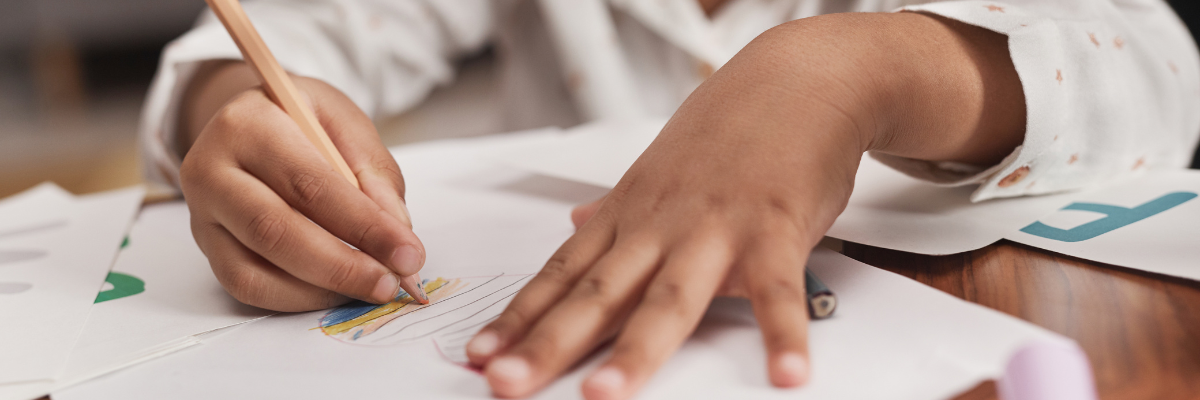
  • Drawing and Coloring – A fun way to develop pencil grip and hand control.
  • Playing with Blocks and LEGOs – Helps strengthen little fingers and improve problem-solving skills.
  • Outdoor Play – Let kids dig in the dirt, climb, and collect small objects like acorns or leaves.

4. Make Handwriting Practice Fun

If your child struggles with handwriting, avoid frustration by making it engaging and low-pressure:

  • Use a Sand or Rice Tray – Have kids practice letters by tracing them with their fingers.
  • Write on a Chalkboard or Whiteboard – This builds wrist and hand strength.
  • Try Special Handwriting Tools – Use thicker pencils, grips, or markers for better control.
  • Turn Writing into a Game – Write letters in shaving cream or use sidewalk chalk outside.
  • Use Fun Sensory Feedback– Using all of your senses increases learning. Think smell, sounds, and textures.

How Carolina Therapy Connection Can Help

At Carolina Therapy Connection, our occupational therapists use fun, play-based techniques to improve fine motor skills. We help kids in Greenville, New Bern, Morehead City, and Goldsboro, NC with:

  • Hand Strength Training – Using squeeze toys, tweezers, and resistance exercises.
  • Coordination Development – Working on scissor use, handwriting, and using both hands together.
  • Self-Care Skills – Teaching kids to tie shoes, button clothes, and use utensils confidently.
  • Handwriting Support – Helping kids develop a firm pencil grip and letter formation skills.

When Should You Seek Help?

If your child:

  • Struggles with holding a pencil or writing legibly
  • Has trouble using scissors or fastening buttons
  • Avoids activities that require hand coordination
  • Seems behind peers in self-care tasks

… they may benefit from occupational therapy.

Contact us today at Carolina Therapy Connection to learn how our team can help your child build stronger hands and gain confidence in everyday tasks!