




Contact Us Make a payment Check In

Promoting Early Language Development (1-3 Years Old): A Guide for Parents

Effective Strategies for Promoting Early Language Development in Toddlers (1-3 Years)

As a parent, one of the most exciting milestones you’ll witness is when your little one starts to babble, form their first words, and eventually begin to combine words into sentences. Children between the ages of 1 and 3 experience a tremendous growth spurt in their language skills, and you, as a caregiver, play a crucial role in nurturing this development. Incorporating simple, everyday activities into your routine can foster your child’s communication abilities while strengthening your bond.

1. Model Simple, Repetitive Language

Language development begins with exposure; repetition is key to helping young children understand and start using words. By consistently repeating words, phrases, or sounds, you provide a model for your child to mimic. For example, when your child points to a ball, you could say, “Ball! Throw the ball.” By using the same word or phrase in similar contexts, your child will start to associate words with their meanings.

Tip for Parents: When playing, model simple sentences like, “I see the car. The car is red,” and repeat the words often to help your child start using them on their own.

2. Expand on Your Child’s Vocalizations and Verbalizations

Children naturally start to make sounds and babble, and it’s essential to expand on these early attempts at communication. If your child says “ba-ba” while playing with a ball, you can develop by saying, “Yes, that’s the ball!” or “Throw the ball to me!” This teaches your child to use more complex sentences and promotes vocabulary growth.

Tip for Parents: Note your child’s attempts to communicate, whether it’s a sound, word, or gesture, and repeat it with added detail or context to reinforce language skills.

3. Use Gestures to Support Understanding

Before children develop verbal skills, they often rely on gestures to communicate. By supporting these gestures with corresponding words, you help children make the connection between their physical actions and the words that describe them. For example, if your child raises their arms to be picked up, you can say, “Up! You want to go up!” This helps them link gestures with language.

Tip for Parents: Encourage your child to use gestures such as pointing, waving, or clapping, and always reinforce those gestures with words to help them connect physical actions with language.

4. Joint Attention: Share the Moment

Joint attention refers to the shared focus of two people on an object or activity. It’s an essential part of early language development because it helps children learn how to communicate about things they’re interested in. Whether it’s a toy, a picture, or a family pet, showing your child that you’re both looking at the same thing helps build their understanding of communication and strengthens your connection.

Tip for Parents: Use eye contact, point to objects, and narrate what’s happening in your child’s environment. For example, “Look at the dog! The dog is running!” This reinforces language development and creates meaningful moments of connection.

5. Engage in Interactive Activities

Interactive activities, such as reading, singing, and playing, are vital for boosting language development. Picture books are especially effective for introducing new words and concepts. Singing simple songs with repetition, like “Twinkle, Twinkle, Little Star,” helps your child learn words through rhythm and melody. Turn-taking games also help develop social communication skills.

Tip for Parents: Incorporate songs, books, and games into your daily routine. For example, during bath time, you can sing a song like “Rub-a-dub-dub, it’s time for a scrub!” to make the experience engaging and language-rich.

6. Narrate Actions and Label Objects

Narrating actions involves describing what you or your child are doing in the moment. This could be anything from “You’re putting the blocks in the box” to “I’m washing your hair.” It helps children understand the connection between words and actions and enhances their vocabulary.

Tip for Parents: Label everyday objects around the house, like “This is a spoon” or “The dog is running.” The more words your child hears, the more likely they will begin using them themselves.

7. Reflect and Support Your Role

Early language development takes time and practice. As a parent, it’s essential to reflect on your child’s progress and feel confident in your role as their primary language facilitator. Incorporating the above strategies into everyday activities will help ensure steady development, but remember that every child develops at their own pace.

Tip for Parents: Keep a journal of your child’s language milestones and celebrate each step along the way. If you have any concerns, discuss them with a speech-language pathologist (SLP) for guidance and support.

How Carolina Therapy Connection Can Help with Early Language Development

At Carolina Therapy Connection, we specialize in early language development and offer programs designed to support parents and caregivers in nurturing their children’s communication skills. Our team of speech-language pathologists (SLPs) provides one-on-one coaching sessions and tailored guidance to help you implement effective language strategies in your everyday routines.

Whether through interactive activities, practical tips, or personalized support, we’re here to empower you as your child’s primary language facilitator. If you’re interested in learning more about Early Language Development and how we incorporate different treatment plans into therapy, including intensives, please feel free to contact us to schedule an evaluation. You can also use this link to explore more about our pediatric intensive therapy services.


 

Baby Bootcamp (Birth-1 Year)

Baby Bootcamp: Enhancing Early Communication for Infants (Birth–1 Year)

The first year of a baby’s life brings remarkable growth and development, especially in communication. Early language experiences form the foundation for future speech, learning, social interaction, and cognitive development. At Carolina Therapy Connection, we prioritize early communication skills, which is why we offer Baby Bootcamp, a specialized early intervention program for infants and their families.

What is Baby Bootcamp?

Baby Bootcamp is an intensive, parent-focused therapy program that supports optimal language development during the first year of life. The program serves infants, particularly those with medical conditions that may affect speech and language development as they grow.

Through Baby Bootcamp, parents learn practical strategies and gain the confidence to actively support their baby’s communication development. Speech-language pathologists (SLPs) lead the program and tailor it to each baby’s unique needs. Parents receive education, hands-on strategies, and daily coaching to help create a language-rich environment that supports natural communication growth.


Key Strategies for Encouraging Early Communication


  1. Verbal Modeling: Baby Bootcamp emphasizes frequent verbal modeling as a core strategy. Parents talk to their babies throughout the day using simple words, phrases, and short sentences. By narrating daily activities and experiences, parents help their babies connect sounds with meaning and build early language comprehension.
  2. Encouraging Babbling: Babbling plays a critical role in early language development. SLPs coach parents to encourage vocal play through fun, back-and-forth sound exchanges. These interactions promote early conversational turn-taking and strengthen a baby’s understanding that communication involves shared interaction.
  3. Using Visual Supports & Gestures: Babies understand gestures and visual cues long before they begin to speak. Baby Bootcamp teaches parents to use gestures such as pointing, waving, and showing objects or pictures. These strategies help babies link language with meaning and support early comprehension.
  4. Daily Routines as Learning Opportunities: Everyday routines such as feeding, diaper changes, and playtime offer powerful opportunities for language learning. Parents learn how to embed language-building strategies into these moments, strengthening joint attention and encouraging early social engagement.


Milestone Tracking & Personalized Feedback

Baby Bootcamp includes milestone tracking, which allows parents to monitor their child’s progress and identify any areas that may need additional support. Through regular assessments and personalized feedback from SLPs, parents can better understand their baby’s unique needs and feel empowered to provide targeted language interventions.


Why Early Language Development Matters

The first year of life is a critical period for language development, and the foundation laid during this time can significantly impact future language and communication skills. Children who experience delays in communication during this stage may face challenges in speech, reading, and social interactions later in life. By focusing on early intervention and active participation, Baby Bootcamp ensures that parents are equipped to help their children reach their language milestones.


How Carolina Therapy Connection Can Help

At Carolina Therapy Connection, our team of experienced speech-language pathologists is dedicated to providing individualized therapy programs like Baby Bootcamp. Our therapists work closely with parents to provide education, personalized strategies, and ongoing support to ensure that each child’s language development is on track. If you have concerns about your baby’s communication skills, our Baby Bootcamp can provide the guidance you need.

If you’re interested in learning more about Baby Bootcamp and how we incorporate this approach into therapy, including intensives, please feel free to reach out to us to schedule an evaluation. You can also use this link to explore more about our pediatric intensive therapy services.

 

Understanding Gestalt Language Processing: Helping Kids Communicate with Flexibility and Meaning

Exploring Gestalt Language Processing


Language allows us to connect with others, express our needs, and make sense of the world around us. For some children, developing flexible, self-generated language takes more time and support. One way individuals learn to use language is through Gestalt Language Processing (GLP). While this approach differs from what many consider “typical” language development, it can still lead to meaningful, spontaneous, and effective communication.

What is Gestalt Language Processing?

Gestalt Language Processing describes a way of learning language that focuses on whole phrases or “chunks” of language rather than starting with individual words. Children in the early stages of this process often use these chunks called gestalts as complete phrases or expressions.

For example, a child may say, “I want to go outside” or “Can I have that?” without fully understanding each word. Instead of building language word by word, the child learns and uses entire phrases as single units.

This pattern contrasts with a more analytic style of language development, where children typically begin with single words like “ball” or “want” and later combine them into longer sentences.


Why is Gestalt Language Processing Important?

Gestalt Language Processing represents a natural and valid way to develop language, though some children benefit from specialized support. Many gestalt language processors use echolalia, which involves repeating words or phrases they hear from others, television shows, or songs. For example, a child may repeat a line from a favorite cartoon or echo something a caregiver previously said.

Although echolalia often reflects meaningful communication attempts, listeners cannot always take these phrases literally. Communication partners often need to interpret the intent behind the words and act as “language detectives” to understand what the child wants to express.

The long-term goal focuses on helping children move through the stages of gestalt language development and begin using more self-generated, flexible language. Children learn to mix and match phrases, break them down into smaller units, and gradually develop grammar skills that support independent communication.


How Does Gestalt Language Processing Work?

Gestalt Language Processing follows a developmental sequence that helps children understand how language parts fit together.

  • Delayed Echolalia: Children at the earliest stage benefit from exposure to a wide variety of meaningful language models. Communication partners actively model natural phrases throughout daily activities, giving the child many opportunities to echo and build a rich collection of gestalts.
  • Mitigation: Next, children begin to mix and match familiar gestalts to create new phrases. For example, a child who knows “Let’s go to the park” and “Take a ride in the car” may combine them to say, “Let’s go to the car.”
  • Breaking Down Gestalts: Speech-language pathologists analyze the child’s repeated scripts with input from caregivers and others who know the child well. Together, they help the child break these scripts into smaller parts, such as single words or short phrases like “red car” or “go park.”
  • Building Self-Generated Communication: Once children understand these smaller language units, they begin using them in new and flexible ways. As they progress through later stages, children move from echoed phrases to original language with more appropriate grammar and sentence structure.

Supporting Language in Natural Settings

Speech-language pathologists model simplified, functional language during everyday activities such as playing, eating, or walking. For example, a therapist might say, “I want the red ball” or “I’m going to the store” and encourage the child to try similar phrases independently.

Language growth also supports social and emotional development. As children gain communication skills, they strengthen their ability to connect with others, express emotions, and regulate their responses.

Caregivers play a vital role in this process. SLPs partner with parents and caregivers to teach practical strategies that encourage natural language during daily routines. This collaboration helps children continue making progress outside of therapy sessions.


Activities to Support Gestalt Language Processing

Engaging, play-based activities help children practice language in meaningful ways.

  • Storytelling and Pretend Play: Pretend play gives children opportunities to use language across different scenarios. For example, a child pretending to be a chef might say, “I’m cooking dinner” or “I need help with the soup.”
  • Interactive Games: Games that promote turn-taking and interaction, such as board games or card games, encourage children to use language spontaneously and flexibly.
  • Songs and Rhymes: Songs and rhymes provide repetitive language patterns that children can learn, remember, and later adapt to new situations, increasing confidence and communication flexibility.


How Carolina Therapy Connection Can Help

At Carolina Therapy Connection, we understand children’s unique challenges in developing flexible, meaningful communication. Our team of experienced speech-language pathologists (SLPs) uses natural language acquisition techniques to help children progress through gestalt language development and develop functional, self-generated language skills.

We offer individualized therapy sessions tailored to your child’s needs. These sessions help your child build language skills through engaging and natural activities. Our team also works closely with parents and caregivers to ensure that the progress made in therapy continues in everyday interactions at home and in the community.


Understanding Speech Sound Disorders in Children: Helping Your Child Feel Understood

Understanding Speech Sound Disorders: Articulation and Phonological Challenges in Children

Speech sound disorders are characterized by difficulty producing clear and intelligible speech. They can manifest as difficulty producing specific sounds (articulation disorders) or broader patterns of sound errors (phonological disorders). Both conditions can hinder communication, affect self-esteem, and impact social interactions.

What Are Speech Sound Disorders?

Speech sound disorders encompass difficulties producing speech sounds correctly or organizing them according to the rules of language.

  • Articulation Disorders: These involve challenges in physically producing specific speech sounds. For example, a child might substitute “wabbit” for “rabbit” or omit sounds altogether, such as saying “ca” instead of “cat.”
  • Phonological Disorders: These refer to predictable patterns of errors affecting sound organization and usage. For instance, a child might consistently simplify sound clusters, saying “pane” instead of “plane.”

Both types of disorders can reduce speech intelligibility, making it hard for others to understand the child.

Examples of Common Speech Errors

Children with speech sound disorders may exhibit errors such as:

  • Substitutions: Replacing one sound with another, such as “fumb” for “thumb.”
  • Omissions: Leaving out a sound, such as saying “bu” for “blue.”
  • Distortions: Producing a sound inaccurately, such as a slushy “s” in place of a clear “s.”
  • Phonological Processes: Using error patterns like fronting (“tat” for “cat”) or cluster reduction (“top” for “stop”).

How Speech Therapy Can Help

At Carolina Therapy Connection, we offer evidence-based treatments tailored to each child’s unique needs. Our team addresses articulation and phonological issues, helping children speak more clearly and confidently.

Therapy Techniques

  • The Cycles Approach targets one phonological pattern at a time in a structured cycle to gradually improve multiple speech errors.
  • Minimal Pairs Therapy: Uses pairs of words like “bat” and “pat” to help children differentiate and produce distinct sounds.
  • Phonetic Placement Approach: Provides multimodal (visual, tactile, and verbal) prompts and cues to assist in articulator placement and movement.
  • Traditional Articulation Approach: Focuses on correctly producing specific sounds through repetition drills and guided practice.
  • Auditory Bombardment: Exposes children to repeated examples of correct sound use to help them internalize patterns.
  • Modeling and Recasting: Demonstrates accurate sound production and corrects errors naturally during conversation.
  • Shaping and Scaffolding: Gradually builds complex skills by starting with more straightforward tasks.

Generalization and Confidence Building

The ultimate goal of speech therapy is to help children generalize their improved skills to everyday interactions. This involves:

  • Practicing target sounds in real-life situations, such as reading aloud or engaging in conversations.
  • Providing home practice activities with parental involvement to reinforce progress.
  • Encouraging self-confidence as children experience success in communicating clearly.

Why Choose Carolina Therapy Connection?

At Carolina Therapy Connection, our licensed Speech-Language Pathologists (SLPs) are dedicated to helping children overcome the challenges of speech sound disorders. We create individualized therapy plans that address each child’s needs while working closely with families to ensure lasting progress.

With our evidence-based approaches, we aim to improve speech intelligibility, enhance communication, and foster self-esteem. If you’re interested in learning more about severe speech sound disorders and how we incorporate different treatment plans into therapy, including intensives, please get in touch with us to schedule an evaluation. You can also use this link to explore our pediatric intensive therapy services.

 

Understanding Childhood Apraxia of Speech 

What is Childhood Apraxia of Speech? 

Childhood Apraxia of Speech (CAS) is a motor speech disorder that originates from the brain, impacting the planning and execution of precise movements required for speech. Unlike other speech disorders, Childhood Apraxia of Speech (CAS) is not related to muscle weakness or paralysis but is a result of difficulties in neural pathways that control speech. 

Causes and Risk Factors of Childhood Apraxia of Speech (CAS):

Understanding the causes and risk factors of CAS is crucial. While the exact cause is often unknown, some factors, such as genetic predisposition, neurological abnormalities, or brain injury, may contribute to the development of CAS. 

Symptoms: 

Recognizing the signs of CAS is essential for early intervention. Common symptoms include: difficulty pronouncing words, inconsistent speech errors, limited vocabulary, and challenges with speech rhythm and intonation. 

Diagnosis: 

Accurate diagnosis of CAS involves a comprehensive assessment by speech-language pathologists. The evaluation may include analyzing the child’s speech patterns, motor coordination, and other related skills. Early diagnosis is vital for effective intervention. 

Intervention Strategies: 

Addressing CAS typically involves speech therapy tailored to the individual needs of the child. Therapists work on improving motor planning, coordination, and overall speech production. Parents and caregivers play a crucial role in supporting these efforts through consistent practice and reinforcement. 

Support for Families: 

A diagnosis of CAS can be overwhelming for families. Providing information, resources, and emotional support is essential. Connecting with support groups and organizations specializing in CAS can offer valuable insights and assistance.

How Can Speech Therapy at Carolina Therapy Connection Help? 

Speech therapy plays a crucial role in supporting individuals with apraxia. Apraxia of speech can also significantly impact communication skills. Speech therapists are trained professionals who use various techniques and strategies to help individuals with apraxia improve their speech abilities. 

Here are some key ways in which speech therapy aids individuals with apraxia: 

  1. Individualized Treatment Plans:

Speech therapists assess each individual’s specific speech difficulties and create personalized treatment plans. These plans are tailored to the person’s age, severity of apraxia, and other individual factors. 

  1. Motor Speech Exercises:

Therapy sessions often involve motor speech exercises that target the coordination and sequencing of oral-motor movements. These exercises help individuals develop muscle memory and improve their ability to produce clear and accurate speech sounds. 

  1. Repetition and Practice:

Repetition is a fundamental aspect of speech therapy for apraxia. Consistent practice and repetition of targeted sounds, syllables, and words contribute to the reinforcement of correct speech patterns. 

  1. Use of Visual Aids:

Visual aids, such as pictures, diagrams, and videos, are commonly incorporated into speech therapy sessions. Visual cues can enhance understanding and assist individuals in forming the correct sounds and word sequences. 

  1. Phonetic Drill and Kinesthetic Feedback:

Phonetic drill exercises involve practicing specific speech sounds. Kinesthetic feedback, where individuals feel and become aware of their oral-motor movements, helps reinforce correct articulatory patterns. 

  1. Promoting Communication Strategies:

Speech therapists work on improving overall communication skills. This includes teaching alternative communication methods, such as sign language or augmentative and alternative communication (AAC) devices, to enhance communication effectiveness. 

  1. Parent Involvement:

In the case of children with apraxia, speech therapists often involve parents in the therapy process. Providing parents with strategies and exercises to practice at home can contribute to the overall success of the therapy.

  1. Gradual Progression:

Speech therapy for apraxia is often a gradual process. Therapists focus on small, achievable goals and celebrate milestones as individuals make progress in their speech development. 

  1. Adaptability and Flexibility:

Speech therapists continuously assess progress and adjust therapy plans as needed. This adaptability ensures that the therapy remains effective and responsive to the individual’s evolving needs. 

10. Promoting Confidence and Independence: 

Beyond improving speech skills, speech therapy aims to boost individuals’ confidence in their ability to communicate. This confidence is vital for social interactions and overall well-being. 

In conclusion, speech therapy is a vital component in helping individuals with apraxia overcome communication challenges. Through targeted exercises, personalized treatment plans, and ongoing support, speech therapists play a crucial role in facilitating improved speech and communication skills in individuals with apraxia.


By: Renee Anderson, SLP

Fighting the Frost: Your Guide to Beating Seasonal Depression

Combating Seasonal Depression: Strategies for Lightening the Winter Blues

As the days grow shorter and the temperature drops, many of us may find our mood shifting along with the seasons. Seasonal Affective Disorder (SAD) affects countless individuals each year, leading to feelings of sadness, lethargy, and even anxiety. Here are some ways to combat seasonal depression and find joy in the colder months:

1. Embrace Natural Light to Combat Seasonal Depression

One of the primary contributors to seasonal depression is the lack of sunlight during winter months. To combat this, try prioritizing exposure to natural light:

  • Morning Walks: Try to take a walk outdoors in the morning. Even on cloudy days, natural light can help boost your mood and regulate your circadian rhythm.
  • Light Therapy: Consider using a light therapy box that mimics natural sunlight. Spending 20-30 minutes in front of this light can be effective in reducing SAD symptoms.

2. Stay Active: A Key to Overcoming Seasonal Depression

Physical activity is a powerful antidote to depression. Regular exercise releases endorphins improves sleep, and boosts overall mood:

  • Find Activities You Enjoy: Whether you’re doing yoga, dancing, or brisk walking, choose activities that are fun and engaging.
  • Set a Routine: Establishing a regular exercise schedule can help structure your day and help you stay motivated.

3. Nourish Your Body to Support Your Mental Health in Winter

What we eat can significantly impact our mood. During the winter, it’s essential to nourish ourselves with healthy, balanced meals:

  • Incorporate Seasonal Foods: Focus on fruits and vegetables that are in season, like citrus fruits, root vegetables, and hearty greens. These can provide essential vitamins that boost your immune system and energy levels.
  • Stay Hydrated: Don’t forget to drink water! Staying hydrated is crucial for maintaining energy and overall well-being.

4. Cultivate Connections to Ease Seasonal Depression

Social interactions can be a vital source of support during the winter months:

  • Reach Out to Loved Ones: Schedule regular catch-ups with friends and family, whether in person or through video calls. Sharing your feelings can foster connection and reduce feelings of isolation.
  • Join a Group: Look for local clubs, classes, or community events that interest you. Engaging in social activities can provide a sense of belonging and purpose.

5. Practice Mindfulness and Self-Care to Beat the Winter Blues

Taking time for yourself is essential, especially during the colder months:

  • Mindfulness Practices: Try incorporating mindfulness techniques such as meditation, deep breathing exercises, or journaling. These practices can help ground you and manage anxiety.
  • Self-Care Rituals: Develop a self-care routine that includes activities you love, whether it’s reading, taking baths, or enjoying a hobby. Prioritize these moments to recharge and relax.

6. Work with a Professional for Seasonal Depression Support

If you find that your symptoms are overwhelming or persistent, seeking professional support is crucial:

  • Therapy: Speaking with a therapist can provide valuable insights and coping strategies tailored to your needs. Therapists at Carolina Therapy Connection provide you with an array of modalities that are used to treat and are particularly effective for seasonal depression.
  • Medication: In some cases, medication may be necessary. Please consult a healthcare provider to discuss potential options if your symptoms significantly impact your daily life.

How Can Carolina Therapy Connection Help with Seasonal Depression?

While seasonal depression can feel challenging, it doesn’t have to be dealt with alone! Carolina Therapy Connection recognizes the importance of seeking support and prioritizing mental health. Our therapists are ready to help, call us today for a FREE Consultation with our therapist!


By: Annalisa Ferguson


Top Toys for Christmas 2024: Gift Ideas that Spark Joy and Learning!

Get ready for a holiday season filled with joy and excitement! 

Christmas is just around the corner, and that means it’s time to start thinking about the perfect toys for the little ones in your life. Toys aren’t just about fun; they’re a gateway to imagination, creativity, and developing skills. Toys play a powerful role in child development by enhancing a wide range of skills in fun and engaging ways. 

Cognitive Development Toys: Best Picks for Christmas that Boost Brainpower

Puzzles, building blocks, and educational games help kids practice problem-solving, spatial awareness, and logical thinking. Toys that encourage sorting, matching, or memory exercises also boost cognitive abilities.


Toys for Fine and Gross Motor Skills: Top Christmas Gifts for Active Play

Gifts like blocks, action figures, and ride-ons—which help improve fine and gross motor skills are examples of gifts that involve grasping, stacking, and balancing. These activities strengthen muscle control, coordination, and agility.


Best Social and Emotional Development Toys for Christmas 2024

Gift ideas that encourage sharing, turn-taking, or role-play—such as dolls, board games, and pretend-play sets—allow kids to practice empathy, teamwork, and communication. These experiences are essential for social and emotional development.


Toys to Foster Language and Communication Skills This Christmas

Reading toys, storytelling sets, and interactive games with audio components help expand vocabulary and encourage communication. Toys that prompt children to describe, ask questions, or follow instructions further support language development.


Top Toys for Creativity and Imagination: Christmas Gifts for Young Innovators

Open-ended toys, like art supplies, dress-up costumes, and pretend-play sets, allow kids to explore their imaginations freely. This fosters creativity, self-expression, and cognitive flexibility, all of which are essential for innovative thinking.


Emotional Development Toys: Christmas Ideas for Nurturing Empathy and Self-Expression

Through imaginative play, children process emotions, practice self-regulation, and learn to empathize with others. Toys that mimic real-life scenarios, such as dolls or play kitchens, provide a safe space for emotional expression and exploration.


Your Ultimate Guide to the Best Christmas Toys for Every Age and Interest

Bring joy to your holiday season with toys kids will love! From educational building sets to group game boards and sensory fidgets, our toy recommendation has something special for every age and interest. 


How Can Carolina Therapy Help?

At Carolina Therapy, we’re here to make your holiday shopping easier with an amazing list of toys and games recommended by our experienced therapists. Our team has carefully curated options for all ages, designed to support development, encourage creativity, and bring endless joy to playtime. Check out our Amazon storefront to find the best toys for this Christmas season—each chosen to help children grow, learn, and thrive!


What’s in Your Sensory Bins!

What is a Sensory Bin?

A sensory bin contains various mediums to provide sensory input via tactile, auditory, and visual stimuli. As an Occupational Therapy Assistant, I treat kiddos who are defensive to sensory input. This can affect feeding, tolerating clothing, tolerating self-care like hair brushing or tooth brushing, and the various textures or sensory inputs we encounter daily. A sensory bin can provide the necessary sensory input to improve attention to tasks, decrease tactile defensiveness, improve tolerance for self-care, improve emotional regulation skills, improve communication skills, and assist with the development of social skills. 

Choosing the Right Container: 

A plastic clear container is ideal because you can see what’s inside and is easy to clean when you are ready to switch out your mediums. You can also use baskets, trays, bowls, etc.

Filling Options: 

  • Base materials: Rice, sand, kinetic sand, dried beans, shredded paper. You can also use edible items such as crushed crackers/cookies, noodles, quinoa, etc, for kiddos who put things in their mouths regularly.
  • Textures: Soft fabric, smooth stones, fluffy cotton balls, feathers, ribbons, or squishy foam. 
  • Colors: Use colored rice or dyed pasta for visual stimulation. Themed Sensory Boxes: 
  • Themes like nature, ocean, outer space, Easter/Spring, or seasons can give great ideas when unsure what to put together. 
    • For example, an ocean theme could include crushed crackers for sand, blue jello for water, and sea animal toys. 
    • Another example is a nature theme, including various leaves, sticks, rocks/stones, animal or insect toys, dirt or crushed Oreos, and gummy worms!
    • Just one more example: Spring could include wildflowers (real or pretend), toy birds/chicks, chickpeas, cotton balls, feathers, etc. 

Incorporating Scents: 

  • Explore scented elements to enhance the sensory experience.
  • Consider items like scented playdough, essential oils, food items, or dried herbs. 

Incorporating Tastes: 

  • If you have a kiddo who is working on trialing new foods/food textures, you can make your sensory bin ALL FOOD items! This allows your child to work on expanding their food repertoire while decreasing the fear associated with trying new foods at mealtimes. 

Sensory Box Safety Tips: 

  • Consider age-appropriate items and avoid small parts that could be a choking hazard. 
  • Remember, when using food/wet items, to change them out regularly to prevent mold/mildew buildup. 
  • AVOID ORBEEZ, please! They are not safe and could cause damage to the internal organs if consumed! 

Have Your Child Assist: 

  • Having your child assist with making the sensory box can be a great way to build communication skills, improve the development of social skills, and decrease fear regarding textures. 
  • Oftentimes, children who are defensive to textures can become very upset or fearful when presented with a new medium. However, if the child can see where the medium comes from, it could decrease the fear significantly! This is also a good opportunity to have your child touch different textures! 

How can Carolina Therapy Connection help? 

  • Ask your child’s therapist about sensory bin ideas used here in the clinic.
  •  Pinterest has great ideas as well!

By: Shelby Godwin, COTA

The Best Chores for Kids by Age: Recommendations from a Pediatric Occupational Therapist

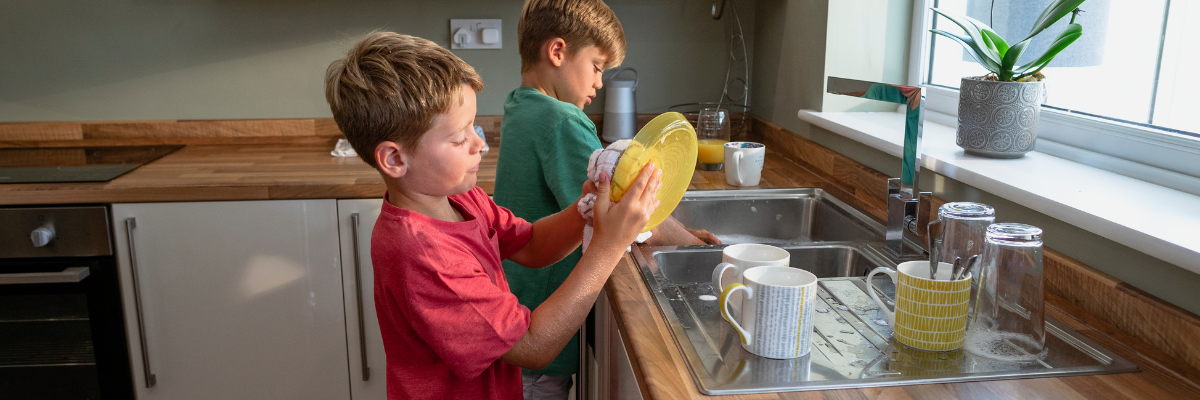
Chores can be essential to a child’s development, helping them build responsibility, independence, and various motor skills. Pediatric occupational therapists often recommend specific chores based on a child’s age to optimize their development and ensure appropriate and manageable tasks. Here’s a guide on the best chores for kids by age, highlighting how these activities can benefit their growth.

Ages 2-3: Building Basic Skills

Chores:

– Picking Up Toys: Encourages organization and fine motor skills.

– Wiping Spills: Helps with motor coordination and understanding cause and effect.

-Putting Clothes in Hamper: Teaches responsibility and hand-eye coordination.

Benefits:

– Motor Skills: These chores enhance fine and gross motor skills through simple movements.

– Cognitive Development: Understanding instructions and following through improves cognitive abilities.

– Responsibility: Starting with simple tasks helps instill a sense of duty and accomplishment.

Ages 4-5: Enhancing Coordination and Responsibility

Chores:

– Setting the Table: Develops sequencing skills and hand-eye coordination.

– Feeding Pets: Teaches empathy, responsibility, and routine.

– Watering Plants: Enhances motor skills and an understanding of plant care.

Benefits:

– Coordination: Tasks that involve multiple steps improve coordination and planning.

– Responsibility: Regular chores like feeding pets build a routine and sense of duty.

– Cognitive Skills: Following more complex instructions aids cognitive development.


Ages 6-7: Introducing Independence

Chores:

– Making the Bed: Encourages independence and fine motor skills.

– Sorting Laundry: Teaches categorization and organization.

– Clearing the Table: Develops responsibility and an understanding of teamwork.

Benefits:

– Independence: These chores promote self-reliance and the ability to complete tasks without assistance.

– Organizational Skills: Sorting laundry and clearing the table enhance organizational abilities.

– Motor Skills: Making the bed involves coordination and fine motor skills.


Ages 8-10: Building Competence and Confidence

Chores:

– Vacuuming: Enhances gross motor skills and a sense of thoroughness.

– Taking Out the Trash: Teaches responsibility and the importance of cleanliness.

– Folding Laundry: Develops fine motor skills and attention to detail.

Benefits:

-Competence: Successfully completing more complex chores builds competence and confidence.

– Responsibility: Regular tasks like taking out the trash teach the importance of contributing to household upkeep.

– Motor Skills: Folding laundry and vacuuming involve both fine and gross motor skills.


Ages 11-13: Encouraging Independence and Time Management

Chores:

– Cooking Simple Meals: Teaches life skills, safety, and time management.

– Mowing the Lawn: Enhances gross motor skills and responsibility.

– Cleaning Bathrooms: Develops an understanding of hygiene and thoroughness.

Benefits:

– Life Skills: Cooking and other complex chores prepare kids for future independence.

– Time Management: Balancing chores with other activities helps develop time management skills.

– Responsibility: Taking on significant chores like cleaning bathrooms fosters a deeper sense of responsibility.


Ages 14-17: Preparing for Adulthood

Chores:

– Managing Finances: Teaches budgeting, saving, and financial responsibility.

– Grocery Shopping: Develops planning skills and an understanding of nutrition.

-Maintaining Vehicles: Teaches practical skills and the importance of upkeep.

Benefits:

– Adulting Skills: These chores prepare teens for adult responsibilities and independence.

– Financial Literacy: Managing finances instills essential budgeting and saving habits.

– Practical Skills: Tasks like vehicle maintenance provide practical knowledge useful in adulthood.


How can Carolina Therapy Connection help?

Incorporating age-appropriate chores into your child’s routine can significantly aid their development. Pediatric occupational therapists emphasize the importance of tailoring tasks to a child’s age and capabilities to foster motor skills, cognitive development, and a sense of responsibility. As children grow, their chores should evolve to challenge them appropriately and prepare them for future independence. Encouraging kids to participate in household chores not only helps them develop crucial life skills but also fosters a sense of accomplishment and confidence.


Handwriting Ideas to Take Homework from Boring to FUN! 

Teaching kids handwriting is an essential skill that sets them up for success in school and beyond.

Here are some tips to make handwriting practice fun and effective for children: 

Start with the Basics:

  • Begin by teaching them how to hold a pencil properly. Make sure they grip it comfortably but firmly. 
  • Use Large Lines: Provide paper with large lines to help them understand the proportions of letters. You can find special handwritten papers with guidelines specifically for this purpose. 
  • Practice Letter Formation: Start with uppercase letters and then move on to lowercase. Demonstrate how each letter is formed and encourage them to mimic your movements. 
  • Repetition: Handwriting improves with practice. Encourage kids to practice writing letters and words regularly. You can make it more engaging by turning it into a game or challenge. 
  • Use Multisensory Approaches: Incorporate different senses into handwriting practice. For example, tracing letters in sand or shaving cream can provide tactile feedback that reinforces learning. 
  • Provide Positive Feedback: Praise their efforts and progress. Positive reinforcement can boost their confidence and motivation to continue practicing. 
  • Set Realistic Goals: Set achievable goals for improvement and celebrate their milestones along the way. 
  • Be Patient: Remember that learning handwriting takes time and patience. Encourage persistence and provide support when they feel frustrated. 

Making handwriting practice fun for kids can encourage them to engage with the activity more eagerly when writing isn’t so easy. Here are some creative and fun ideas to make handwriting more fun: 

  • Write with Different Materials: Encourage kids to write on a chalkboard with different materials, such as colored pencils, gel pens, markers, or chalk. 
  • Rainbow Writing: Have kids trace over letters or words multiple times using different colored pencils or markers.
  • Letter Hunt: Create a scavenger hunt where kids search for letters in books, magazines, or around the house. Once they find a letter, they can write it down! 
  • Write a Story: Encourage kids to write a short story or a letter to a friend or family member. 
  • Write on Unconventional Surfaces: Let kids write on unconventional surfaces such as a large whiteboard, a window with washable markers, or even with their fingers in sand or shaving cream. 
  • Handwriting Games: Incorporate games into handwriting practice, such as Hangman, Tic-Tac-Toe, or Bingo, using words or letters. 
  • Decorate Letters: After writing a letter or word, encourage kids to decorate it with doodles, stickers, or drawings related to the word. 
  • Write Secret Messages: Have kids write secret messages to each other using a white crayon on white paper. When they’re done writing, they can reveal the messages by painting over it with watercolors. 
  • Create Handwriting Challenges: Set up fun handwriting challenges such as writing the alphabet backward, writing with their non-dominant hand, or writing as neatly and as quickly as possible. 

How can Carolina Therapy Connection help with kids’ handwriting skills?

If your kiddo is having difficulty with handwriting, an Occupational Therapist at CTC can help! Whether it be because your kiddo doesn’t attend well due to finding handwriting boring, finds difficulty with the visual perceptual and visual motor skills necessary to orient and place the words on the line, or because of decreased strength making it hard to apply the right amount of pressure, an Occupational Therapist can determine strategies to make it easier for your child to enjoy handwriting! 

By: Shelby Godwin, COTA/L, AC