



The Power of Movement: Why Vestibular Input is Essential for Your Child’s Development
The vestibular system is responsible for detecting motion and changes in position in space. It helps us maintain balance, stabilize our gaze, and coordinate our movements. The vestibular system can be over-responsive or under-responsive, leading to difficulties in managing sensory input related to balance and movement. Whether it’s seeking constant motion or avoiding certain activities, the way the brain interprets vestibular input can deeply affect everyday functioning.
How Vestibular Input Affects Our Sensory System
- Balance and Coordination: Vestibular input plays a key role in physical coordination. When the vestibular system is under-responsive, kiddos may seek out activities that provide more movement or stimulation, such as swinging, jumping, or spinning. On the other hand, kiddos with an over-responsive vestibular system may become easily disoriented, dizzy, or upset by even small changes in movement.
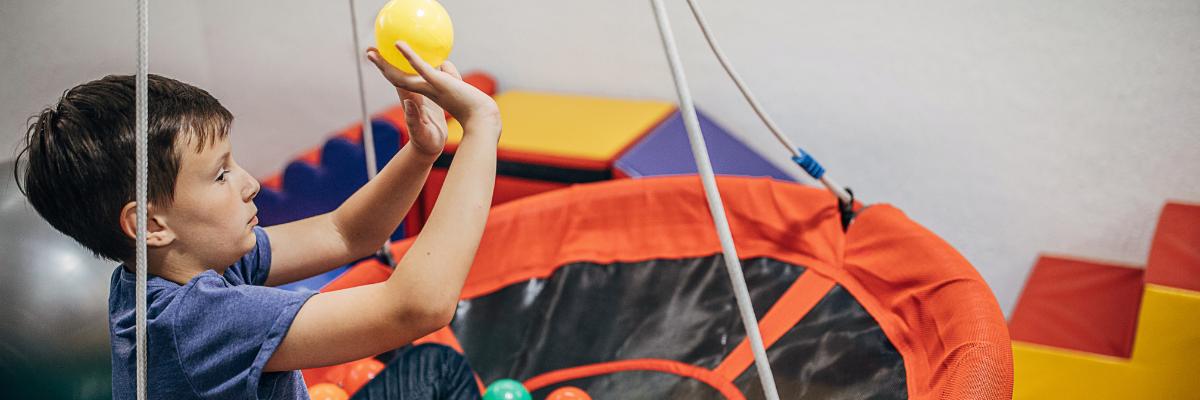
- Emotional Regulation: The vestibular system isn’t just responsible for physical movement; it also affects emotional regulation. Movement helps to activate the parasympathetic nervous system, which calms the body after stress. For some kiddos, vestibular input can either help calm an anxious or overstimulated state or heighten feelings of discomfort. For example, slow, rhythmic movements like rocking or swinging can be soothing, while more intense or unpredictable motion can lead to sensory overload and anxiety. On the other hand, for some kiddos, light touch may be offputting, but a rigorous spin on the platform swing is enjoyable.
- Attention and Focus: Proper vestibular input can support better attention and focus, particularly in the classroom setting. Kiddos who are under-responsive to vestibular input may have trouble staying seated or paying attention for long periods. But, those who are over-responsive may become distracted or overwhelmed by movement in their environment. Finding the right level of vestibular stimulation can help maintain attention and improve cognitive function.
How to Support Vestibular Input in Your Child
Supporting vestibular input for your child is crucial for promoting better sensory regulation. Occupational therapists (OTs) often use vestibular activities as part of their therapeutic interventions. Here are some ways to provide beneficial vestibular input:
- Slow, Rhythmic Movement: Kiddos who need calming input, gentle rocking, swinging, or using a therapy ball can provide the right kind of stimulation. These types of activities help to regulate the nervous system and support emotional regulation.
- Varied Movement: Kiddos who seek more intense vestibular input, activities like jumping on a trampoline, spinning in a chair, or fast-paced swinging can help. However, it’s important to introduce these activities gradually and monitor the individual’s response to prevent overstimulation.
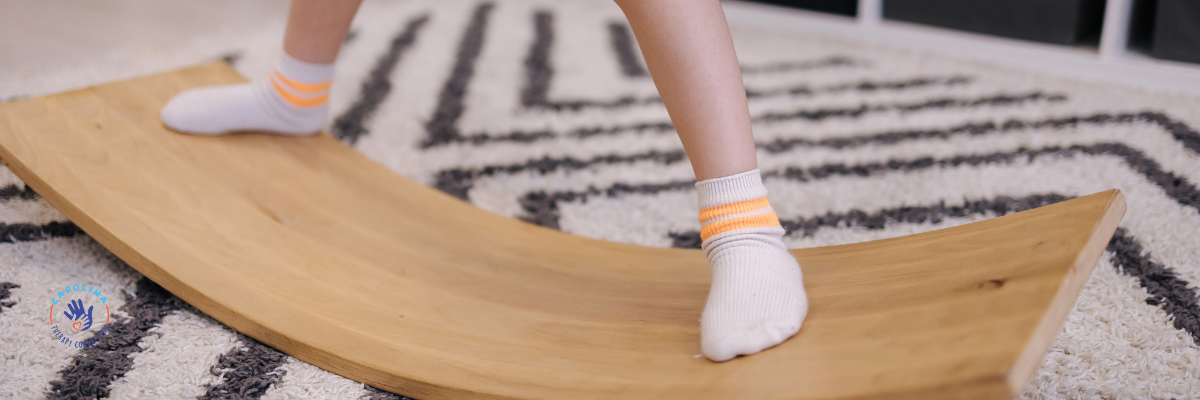
- Balance Activities: Balancing exercises, like standing on one foot or using balance boards, can help kiddos improve their proprioception and vestibular awareness. These activities also promote motor coordination and body awareness.
- Environmental Modifications: The environment can greatly impact how a kiddo processes vestibular input. Using furniture that allows for movement, incorporating standing desks, or offering fidget tools can help them stay engaged without becoming overstimulated.
How Can Carolina Therapy Connection Help?
By tailoring sensory experiences to a kiddo’s needs, we can help them achieve better regulation, improve their motor skills, and enhance their overall quality of life. Whether through therapeutic exercises, environmental adjustments, or careful attention to their sensory needs, ensuring that vestibular input is appropriately addressed can make a world of difference in your kiddo’s life!
By Shelby Godwin, COTA/L, AC