




Contact Us Make a payment Check In

Building Strength from the Start: The Benefits of Tummy Time for Babies

Tummy Time: Why It’s a Big Deal for Your Little One!

Have you ever heard of tummy time? If you have a baby or know someone with one, you might have! Tummy time is when your baby spends time lying on their belly while they’re awake and supervised. It might not seem like a big deal, but it’s super essential for your baby’s growth and development!

What Is Tummy Time?

Tummy time is simple: place your baby on their belly while they’re awake and keep a close eye on them. This helps strengthen their neck, shoulders, and back muscles, allowing them to grow strong and achieve significant milestones, such as rolling over, sitting up, and crawling.

Why Is Tummy Time Important? Babies spend a lot of time on their backs when they sleep, which is great for safety! But if they don’t get enough time on their tummies while awake, their muscles might not develop as well. 

Tummy time helps:

  • Strengthen muscles – It builds the muscles needed for activities such as sitting, crawling, and walking.
  • Prevent flat spots on the head – Babies’ heads are soft, and spending too much time on their backs can increase pressure on the back of the head, ultimately causing flattening.
  • Improve motor skills – Tummy time gets babies ready for significant movements like rolling and reaching.
  • Support visual development – Looking around from a new angle helps babies learn and explore!

How to Make Tummy Time Fun

Tummy time isn’t always a favorite at first, but don’t worry! There are ways to make it fun for your baby:

  • Use toys – Place colorful, high-contrast, or noisy toys in front of them to encourage reaching and exploring their surroundings.
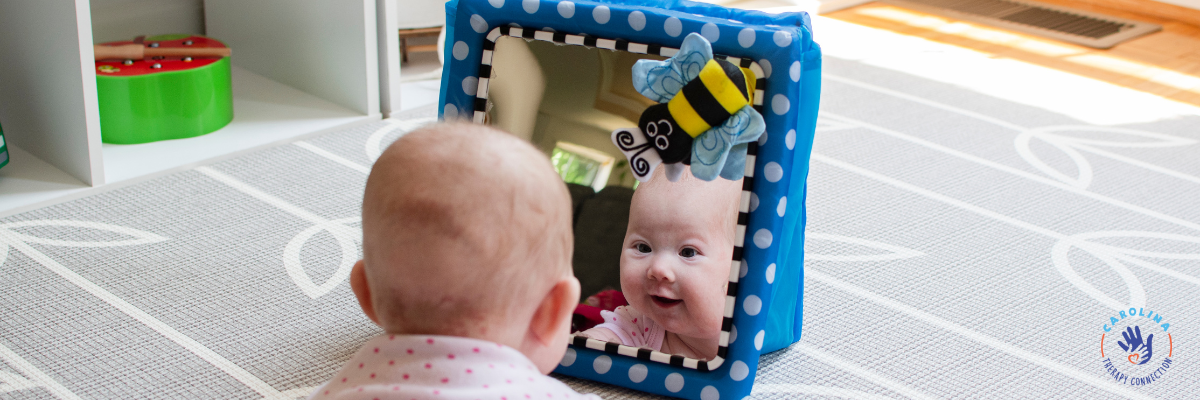
  • Get on their level – Lie on the floor with your baby so they can see your face and hear your voice.
  • Try different surfaces – A soft blanket, tummy time mat, or even your chest can make it more comfortable.
  • Make it short but frequent – Start with a few minutes a couple of times a day and work up to longer sessions.

When Should You Start Tummy Time?

You can start tummy time as soon as your baby is born! Even newborns can spend a little time on their bellies each day. By around 3 to 4 months old, babies should aim for about an hour of tummy time spread throughout the day.

Need Help? Carolina Therapy Connection has you covered! 

If your baby doesn’t enjoy tummy time or has trouble lifting their head, our pediatric physical therapy team is here to help! We can give you fun tips and exercises to make your little one’s tummy time easier and more enjoyable.

Tummy time is a small activity with enormous benefits! Give it a try, have fun, and watch your baby grow stronger every day!

24-Month-Old Milestone

What speech development will my child be doing at this time? 

At 24 months, most children have developed a vocabulary of at least 200 words or more. They can now use simple two-word phrases and may even begin to form simple phrases. These sentences may not be grammatically correct, but they convey meaning and reflect the child’s attempts to express themselves more elaborately. For example, a 24-month-old might say “big truck” or “mommy book.”

One notable aspect of language development at this age is the emergence of pronouns. Many toddlers start using pronouns such as “I,” “me,” and “you” to refer to themselves and others. This marks a significant step in their ability to express personal experiences and interact with others. 

In addition to vocabulary expansion and sentence formation, toddlers are refining their articulation skills at this stage. While their speech may still be unclear to unfamiliar listeners, families can usually understand their child’s words and phrases. Sound errors are typical at this age, and most children gradually improve as they continue to practice and refine their speech sounds. 

What else should my child be doing for Speech Development?

Another exciting 24-month-old milestone in language development is the ability to follow simple directions. Toddlers can often understand and respond to basic instructions, such as “give me the ball” or “come here.” This newfound skill contributes to their growing independence and ability to engage in simple tasks.

Social communication skills also make significant strides at this age. Many 24-month-olds enjoy engaging in simple conversations and sharing their thoughts and observations with those around them. They may imitate adult speech patterns and gestures and even attempt to participate in back-and-forth exchanges. Furthermore, imaginative play also begins to blossom. They might pretend to play with dolls or stuffed animals, using words to narrate their play and express creativity. 

What Can I Do at Home? 

It’s important to note that while there are general milestones for speech and language development, each child is unique and may progress at their own pace. Regular exposure to language-rich environments, positive interactions with caregivers, and engaging activities that stimulate language development all contribute to a child’s linguistic advancement.

The 24-month mark is an exciting stage in a child’s speech and language development. It represents a time of significant growth in vocabulary, sentence structure, and social communication skills, laying the foundation for more advanced language abilities in the future. Parents and caregivers play a crucial role in fostering this development through supportive and enriching interactions with their toddlers.


By: Lindsey Bryant CF, SLP