



Contact Us Make a payment Check In

Picky Eating or Something More? Signs Your Child Needs Feeding Support

Supporting Children Who Struggle at Mealtimes

Does your child avoid certain foods, gag at new textures, or flat-out refuse entire food groups? Mealtimes shouldn’t feel like a battle, but for parents of picky eaters, it can be one of the most stressful parts of the day. Pediatric occupational therapy can help transform mealtime from a struggle into a positive experience by addressing the root cause of your child’s food aversions.

What Is a Picky Eater?

Picky eating is more than just being “a little particular.” It can include avoiding specific textures, colors, smells, or temperatures of foods, often resulting in a restricted diet. While some pickiness is typical during development, extreme food avoidance or distress around eating may signal an underlying sensory or developmental challenge.

Children may be labeled “picky” when they:

  • Eat fewer than 20 foods
  • Refuse entire food groups (like fruits or vegetables)
  • Struggle with food textures or strong smells
  • Experience anxiety or meltdowns at mealtimes
  • Have difficulty chewing or swallowing certain foods

Why Occupational Therapy for Picky Eaters?

Pediatric occupational therapists (OTs) are trained to look beyond eating behaviors and uncover the “why” behind picky eating. Often, it’s tied to sensory processing difficulties, oral motor challenges, or poor postural control that makes eating physically uncomfortable.

Sensory Processing and Feeding

Children who are sensitive to textures, smells, or temperatures may experience a sensory overload when introduced to new foods. For example, a soft banana might feel “mushy” and unpleasant, or the smell of broccoli might feel overwhelming.

OTs help children explore these sensitivities in a supportive environment through sensory integration therapy. They work to slowly and safely desensitize kids to new sensations so that food becomes less threatening.

Oral Motor and Postural Skills

Eating also requires strong oral motor and postural control. Children with weak jaw muscles, poor tongue coordination, or low muscle tone may find chewing difficult or exhausting, which can make food less enjoyable. OTs support these underlying motor skills to help children feel more confident and capable during meals.

Red Flags That May Indicate a Need for Help

If your child’s picky eating is affecting growth, nutrition, or daily routines, it might be time to speak with a professional. Some red flags include:

  • Difficulty transitioning to solid foods
  • Coughing, gagging, or vomiting during meals
  • Eating the same foods every day without variation
  • Poor weight gain or slow growth
  • Avoiding social situations involving food

Strategies OTs Use with Picky Eaters

Occupational therapy doesn’t just take place at the clinic—it empowers families with practical strategies to use at home. Here are a few common approaches used by OTs:

  • Food Chaining: This method helps children transition from preferred foods to new foods by making small, manageable changes. For example, moving from plain crackers to whole wheat crackers, then to toasted bread.
  • Play-Based Exposure: Children explore new foods through play and sensory activities—touching, smelling, and eventually tasting foods at their own pace. Removing pressure and expectations allows kids to feel safe and curious.
  • Positive Mealtime Routines: Therapists help families create consistent routines and eliminate everyday power struggles during meals. This might include visual schedules, timer-based meal times, or family-style dining to model good behavior.
  • Environmental Modifications: Simple changes, such as adjusting seating posture, minimizing distractions, or using adaptive utensils, can make a significant difference in a child’s willingness to participate in meals.

How Carolina Therapy Connection Can Help

At Carolina Therapy Connection, we understand how frustrating and emotional it can be to raise a child who struggles with eating. Our pediatric occupational therapists specialize in identifying the underlying causes of picky eating and providing customized strategies that make a real difference.

Whether your child needs support with sensory processing, oral motor skills, or building positive routines, we are here to help. We offer free screenings to determine if your child would benefit from therapy, and we can schedule a comprehensive feeding evaluation to get started. Let us help turn mealtime into a time of connection, not conflict.

Let’s PLAY!

Why is Play Development Important for Children? 

An essential component of a child’s learning is through play. Play builds the foundation of teaching children how to communicate with others, solve problems, and develop new motor skills. Play often involves spending much time on the floor being silly, making animal noises, or acting out your child’s favorite nursery rhyme songs. Play appears too fun to be therapeutic in speech therapy sessions, right? However, that’s when the magic truly happens! Understanding why and play development for children’s communication skills is helpful.


Different Types of Play Development for Children’s Communication Skills:

  • Functional Play

    • Begins before two years old. It is the most common play among infants, toddlers, and young children. Functional play is when toys or objects are used according to their intended function, such as rolling a ball, pushing a car on the floor, banging blocks, etc. 
  • Relational Play

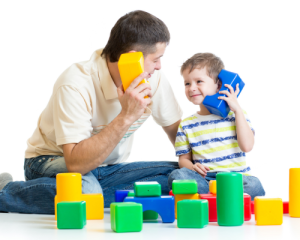
    • Also, it can begin before two years old. Children who engage in relational play often use (manipulate) items to discover how they relate to one another. Examples of relational play include feeding a teddy bear, stacking blocks, or grouping objects. 
  • Self-Directed Play

    • Begins before two years old as well. Self-directed play is when children use toys or objects toward themselves. They determine and control the content and intent of their play by following their own ideas and interests. Toys or objects offered to children are simple and can be play-doh, crafts, pretend food/clothes, etc. 
  • Parallel Play

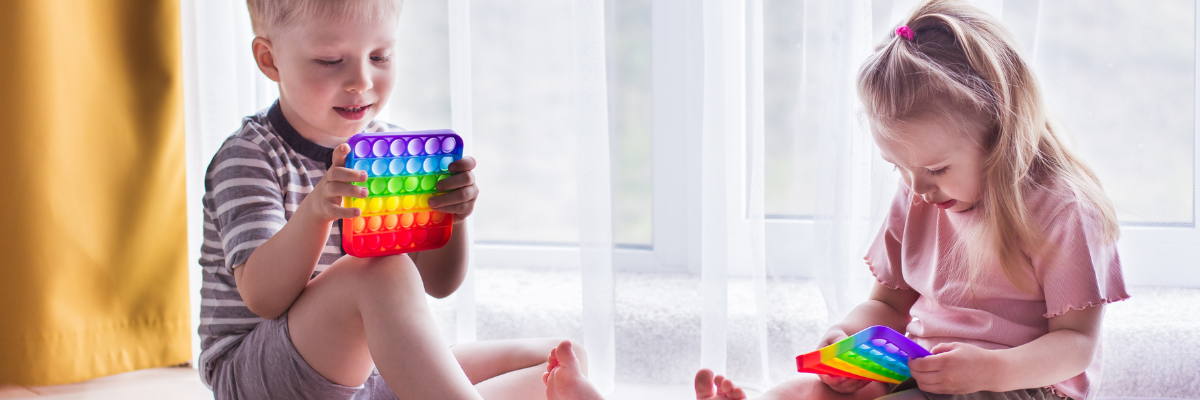
    • Begins around 2 to 3 years old. This play involves children independently playing with the same toys/objects next to each other. However, they are being very observant. At this point, the child is more aware of their presence around others. The child has increased interest and acknowledges that the other person is playing similarly to them. Most often, they will begin to imitate based on peer modeling. Thai type of play can be seen when two children are playing with their own farm animals, making animal sounds but not interacting.

Now That We Know Play Development, How Do We Help Children Improve Their Communication Skills at Home?

  • Set up your environment so that the child can better focus   
  • Engaging and joining in on the child’s interests
  • Follow the child’s lead
  • Gradually introducing new toys and sensory experiences
    •  Some children need exposure to a new toy over time before initiating a purposeful interaction on their own 🙂
  • Modeling how to play with the toy and gradually fading support  
  • Providing rewards with successful attempts at play
  • Encouraging the child to imitate sounds and words (e.g., go, uh-oh, neigh, etc.)
  • Ask open-ended questions like “What should we make?” “Where should this go?” “What should we feed the dog?” by using toys such as animals, blocks, and/or cars.
  • Incorporating play based on various contexts (e.g., Play with a sibling and/or peer) 

Activities to Try at Home:

  • Bubbles
  • Cars, trains
  • Books
  • Blocks, Legos, or Nesting Eggs
  • Baby doll/dollhouse 
  • Magnetic Tiles  
  • Ball
  • Singing nursery rhyme songs 
  • Farm set / Kitchen set 
  • Potato Head
  • And MUCH MORE 🙂 

“Play is our brain’s favorite way of learning,” said Diane Ackerman.

How can Carolina Therapy Connection Help?

Further questions or concerns regarding play development for children’s communication skills? A Speech-Language Pathologist can support your child and provide parent education/training to best support your child’s communication development. Play in speech therapy increases the child’s motivation, increases communication opportunities, strengthens the development of other developmental skills, and more!