




Contact Us Make a payment Check In

Autism Center and Autism Resources

CTC Continues Commitment to Serving Autism Community and Provides Resources for Families

Since becoming a Certified Autism Center™ in 2020, Carolina Therapy Connection Greenville (CTC) has built upon the certification principals by collaborating with other resources to create a stronger community. Its therapists are now going into ABA clinics to provide occupational and physical therapy services.  As part of CTC’s ongoing commitment, team members recently completed additional training through IBCCES to meet renewal requirements and ensure staff have up-to-date knowledge and resources to enhance their skill sets.  Part of Carolina Therapy Connection’s mission is to provide valuable and specific autism resources for families that will help them throughout their daily routines.

Inclusive Programs

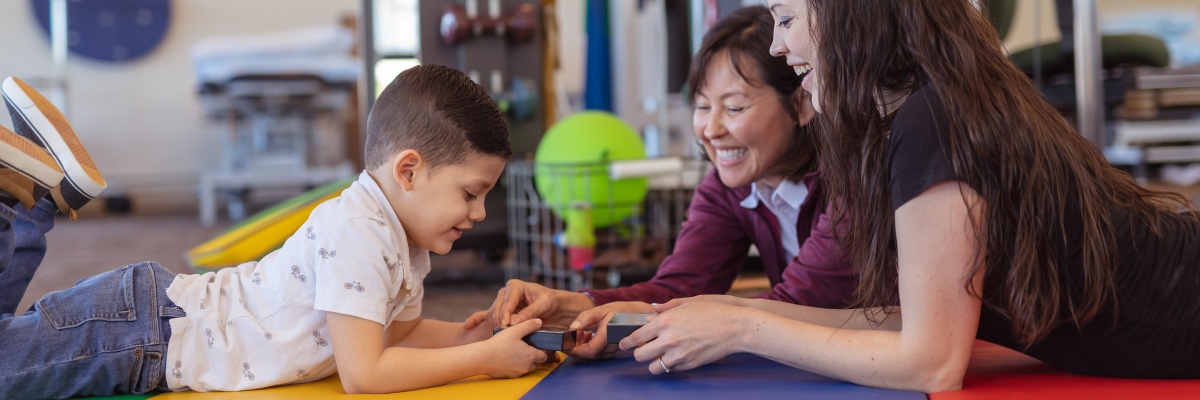
CTC also has a Prep Academy that provides a kindergarten readiness program that integrates typically developing children as well as children on the autism spectrum into the same learning environment.  Cindy Taylor, owner of Carolina Therapy Connection Greenville said, “The team’s hope and passion is to take the knowledge of our training and provide a safe space for kiddos to begin to engage in reciprocal play, be able to tolerate various sounds, and to begin to trust their environment.”

“Families have numerous and various reasons for the  ‘why’ behind what leads them to CTC.  Part of the ‘why’ for both the families we serve as well as potential new hires, is the Certified Autism Center™ designation and the individualized therapist training that comes with that.  Families feel comfort in knowing that owner, Cindy Taylor has taken the extra step to ensure that we as therapists receive ‘a little extra something’ to assist and better serve their kiddo,” shared Stevi M. Smith, COTA/L, AAC, HR Manager at CTC Greenville. “A lot of families who come to us may have had unpleasant experiences through other venues, be it school, a daycare, or another facility. So, when families see that we take time out to learn more about their kiddos, it means a lot to them.”

About CTC

Carolina Therapy Connection is a pediatric private practice serving children birth through adolescence and the team consists of occupational therapists, physical therapists, speech language pathologists, and educational specialists. Since becoming an autism certified practice employees have shared their excitement for IBCCES’ discipline specific training and certification options!  Many staff members shared comments like, “Sometimes we attend training, it’s nice and informative, but we have to think about how it applies to us professionally. This is not the case with IBCCES’ training.  Specific treatment scenarios are given throughout the training.”

  “It’s wonderful to have long-term partnerships with dedicated teams such as the professionals at Carolina Therapy Connection Greenville. Our programs require renewal and are updated with multidisciplinary experts as well as autistic individuals to ensure we can support professionals as best practices emerge” said Myron Pincomb, IBCCES Board Chairman.

For more than 20 years, IBCCES has been the industry leader in cognitive disorder training and certification for education, healthcare, and corporate professionals around the globe. IBCCES provides evidence-based training and certification programs created in conjunction with clinical experts and autistic individuals in order to provide professionals better understanding of how to communicate and interact with individuals with cognitive differences or sensory needs, industry best practices, and the latest research in these areas.

IBCCES also created CertifiedAutismCenter.com, as a free online resource for parents that lists certified locations and professionals. Each organization listed on the site has met Certified Autism Center™ (CAC) requirements.

About IBCCES

Delivering The Global Standard For Training and Certification in The Field of Cognitive Disorders – IBCCES provides a series of certifications that empower professionals to be leaders in their field and improve the outcomes for the individuals they serve. These programs are the only training and certification programs endorsed by the largest grassroots autism organization in the world, The Autism Society of America, and recognized around the world as the leading benchmark for training and certification in the areas of autism and other cognitive disorders.

Autism centerAutism center greenville, nc

Autism Center

Your Baby’s Communication: Prelinguistic Vocalization

What can I expect before my baby begins talking?

Your baby’s first form of communication will be nonverbal and happens soon after birth. Your may baby grimace, cry, or squirm to express a range of emotions and physical needs, from fear and hunger to frustration and sensory overload. Oftentimes, parents learn to listen and interpret their baby’s different cries, coos and babbles. Many parents wonder when their baby will begin using words, imitate them, laugh and form a variety of other communication methods to express how they are feeling. A very important part of language development is the prelinguistic stage, which is the stage that is characterized by vocalizations before language begins. So for starters, what is language? How does it develop during a baby’s first year of life?

Language is when we use and organize sounds and words to convey meaning. Language development is considered a continuum, and there is not an abrupt shift from babbling to talking. There is an overlap between all stages of language development. Every child is different in the way they learn and grow; however there are many exciting milestones to watch for as your baby explores their environment in the first few months of life. Continue reading to learn more about the prelinguistic stage, how you can interact with your child during this stage, and how Carolina Therapy Connection can help your child reach their full potential!

What can I expect from my baby during the prelinguistic vocalizations stage?

Carolina Therapy Connection Prelinguistic Behaviors


1: Reflexive and Vegetative

  • Occurs birth – 2 months
  • Reflexive sounds (crying, coughs, burps)
  • Cries that mean different things (hunger, pain, etc.)

2: Cooing and Laughter

  • Occurs 2 – 4 months
  • Vowel like sounds
  • Squeals

3: Vocal Play

  • Occurs 4 – 6 months
  • Longer vowel like sounds
  • Some consonant sounds
  • Changes in pitch and loudness

4: Canonical Babbling

This stage is when babies may start to imitate what they hear! This is a fun time to sit and play with your babies and babble to them and see if they imitate!

  • Occurs around 6 months – until first words
  • Reduplicated or strings of identical syllables: “mamamama” “babababa”
  • Variegated or strings of varying consonants and vowels: “madagama”

5: Jargon

During this stage, it will seem like your baby is trying to tell you a story. They may look at you and make facial expressions and use hand movements. This is a fun time to encourage them and engage with them in conversation. Check out this awesome resource from Reading Rockets for Tips and Activities to Encourage Speech & Language Development!

  • Occurs around 10 months or older
  • This stage overlaps with first words
  • Strings of babbling
  • Paired with eye contact, gestures, and adult like intonation

Why does the prelinguistic stage matter?

Research indicates that babbling correlates to later language development. Greater babbling complexity and a variety of sounds used positively indicate greater language growth. Delayed babbling may be an indicator for speech/language delays. If you notice that your child is not babbling by 10 months of age, it may be beneficial to consult with a Speech Language Pathologist. While this is not the only factor, it can be helpful when looking at your child’s overall development.

How can Carolina Therapy Connection help?

There is so much new information and research these days that can be overwhelming for a parent. At Carolina Therapy Connection, our team of pediatric speech therapists are licensed professionals who are trained to help children with any communication difficulties. We know that developing strong communication skills is one of the most important elements to socializing and creating relationships.

Our knowledgable and experienced team of SLP’s provide screenings, assessments, consultations, and treatment to children birth through 21 years old. If you have any questions about your child’s development or would like to set up a FREE screening with one of our speech language pathologists to determine the need for an evaluation, call our clinic at 252-341-9944 to speak with one of our staff members. 

Meet the Author

Kayla Hudson Prelinguistic Communication Carolina Therapy Connection Speech Therapist

Carolina Therapy Connection Prelinguistic Communication Blog Greenville, New Bern, Goldsboro North Carolina Speech Therapy

The Vestibular System in Pediatrics

What is the Vestibular System?

Vesti-what?!? The vestibular system is made up of the inner ear, vestibulocochlear nerve that communicates between the inner ear and brain, parts of the brainstem, and cortical areas in the brain. The vestibular system responds to head movements like when you nod your head “yes”, shake your head “no”, or tip your head to shake the water out of your ears. It also responds to movements like when you move forward or backwards when you’re sledding, move up and down like when you’re jumping, or when you spin around in circles. Overall the vestibular system helps you figure out where you are in space as you move around your environment so that you can… 

  • Maintain your gaze on a target while moving your head (vestibulo-ocular reflex)
  • Maintain postural control or balance
  • Orient yourself to your environment
  • React appropriately to your surroundings
  • Avoid falls

Check out this helpful resource from Integrated Learning Strategies, who breaks down the vestibular system as an internal GPS system for the body!

Vestibular Therapy Carolina Therapy Connection

What is vestibular dysfunction?

Vestibular dysfunction may be attributed to deficits or impairments of the inner ear, vestibulocochlear nerve, brain, or brainstem. As adults we may notice difficulties with our vestibular system due to symptoms like dizziness, vertigo, trouble keeping objects in focus while moving our head, or changes in our balance. Children who have vestibular concerns may not realize that they are dizzy or that movement of letters when reading is atypical if they have always experienced these symptoms. This can make diagnosing vestibular concerns hard and can often times be mistaken for other issues (learning disabilities, behavior problems etc.) due to a child’s inability to explain the symptoms they are experiencing.

Migraines, Benign Paroxysmal Vertigo of Childhood (BPVC), and Traumatic Brain Injuries are the most common causes of childhood vertigo. Ocular disorders, inner ear malformations, labyrinthitis (inflammation of the inner ear), and neuritis (inflammation of the vestibulocochlear nerve) are also common causes.

As a parent, here are a few signs and symptoms to watch for regarding vestibular dysfunction:

  • Head tilted to the side
  • Easily stressed, anxious, or upset with quick changes in movement or being on unstable, uneven, or taller surfaces
  • Nausea and vomiting
  • Imbalance or frequent falls
  • Vertigo or dizziness
  • Reduced cognitive performance
  • Decreased consciousness or arousal
  • Poor spatial awareness, navigation, or orientation
  • Ringing in ears
  • Spontaneous and involuntary eye movements
  • Motion/car sickness
  • Constant need for movement or taking unsafe risks for various positional changes or movement patterns

What should you do if your child is experiencing vestibular dysfuntion?

First and foremost, consult your child’s pediatrician to discuss your concerns. You may be referred to a neurologist for further evaluation and recommendations. If your child’s pediatrician or neurologist determines that your child would benefit from Physical or Occupational Therapy treatment, your child may be referred for an initial OT and/or PT evaluation.

How can a pediatric occupational therapist or physical therapist help with vestibular concerns?

  • During the initial evaluation your therapist may…
    • Assess how your child’s eye move in a variety of situations
    • Screen for abnormal eye movements
    • Assess your child’s visual acuity
    • Test your child’s balance while static or standing still, as well as their dynamic balance while on a variety of surfaces, while they are moving, or while they are performing a task
    • Assess how your child responds to various positional changes and movement patterns
    • Assess for seeking or avoidance behaviors of various positional changes or movements
  • During treatment your therapist may…
    • Use balance beams, obstacle courses, balance boards, single leg stance activities, etc. to challenge and improve your child’s balance.
    • Use stair training, climbing a rockwall or ladder, standing on a platform swing, etc. to address gravitational sensitivities and challenge balance at various heights.
    • Use swinging, spinning, rolling in a foam cylinder, sliding down slide, riding on a scooter board, etc. to help strengthen your child’s vestibular system. These activities will also potentially help delay the onset or reduce the severity of your child’s dizziness.
    • Use specific activities involving movement of their eyes and head to strengthen their vestibular system.

If you have concerns about your child’s vestibular function, motor development, sensory difficulties or anything else, call Carolina Therapy Connection at 252-341-9944 or email us at in**@***********************on.com to get started today! We accept all major insurances and would love to help your family and kiddo maximize their independence and potential to grow healthy and strong!

Blog Written By: Joann Flaherty, PT, DPT and Jessica Reynalds OTD, OTR/L

References:

  • Casselbrant ML, Villardo RJ, Mandel EM. Balance and otitis media with effusion. Int J Audiol. 2008;47(9):584-589.
  • Christy, J., Beam, M., Mueller, G., & Rine, R. (2019). Just Screen It!! (Part 2): Developmental Disability, Vestibular Deficit, or Both?. Presentation, APTA Combined Sections Meeting.
  • Christy, J., & Rine, R. (2019). Just Screen It!! (Part 1): Developmental Disability, Vestibular Deficit, or Both?. Presentation, APTA Combined Sections Meeting.
  • Lin, C. (2019). Vestibular Rehabilitation Intervention. Presentation, East Carolina University.
  • Salami, A., Dellepiane, M., Mora, R., Taborelli, G., & Jankowska, B. (2006). Electronystagmography finding in children with peripheral and central vestibular disorders.International Journal of Pediatric Otorhinolaryngology, 70(1), 13-18. doi:10.1016/j.ijporl.2005.05.001
  • Wiener-Vacher, S. R. (2008). Vestibular disorders in children. International Journal of Audiology, 47(9), 578-583. doi:10.1080/14992020802334358
Pediatric Vestibular Therapy Greenville, NC Carolina Therapy Connection

Helping Your Child Learn to Walk

Concerns About Your Child’s Ability to Walk

Are you concerned that your child hasn’t started walking yet? Development and achievement of motor milestones happens at a pace unique to each child. However, if your child has not yet started walking independently by 18 months it may be time to reach out to your local Physical Therapist for an evaluation. The Centers for Disease Control and Prevention (CDC) acknowledges that these walking-related physical milestones are typically met by age 1:

  • pulling up to stand
  • walking while holding on to furniture
  • may be taking a few independent steps
  • standing holding on and may stand alone

Delayed walking can occur for a variety of reasons – core weakness, lower extremity weakness, vestibular dysfunction, gravitational sensitivities, impairments in the motor plan or coordination for walking, and balance deficits to name a few. During a Physical Therapy evaluation we will assess your child’s strength, movement of their extremities and trunk, and balance. We will also screen for any neurological and vestibular concerns, as well as keep an eye out for any sensory involvement or gravitational sensitivities.

How can you begin helping your child learn to walk?

Here are some activity ideas that may be used by your Physical Therapist and that you can try at home to jump start those unsupported steps and help your child walk:

    1. Activities to promote weight shifting between lower extremities, as well as single leg stance balance needed for unsupported walking. Cruising laterally (side to side), across corners, around corners, and pivoting between surfaces. This can be done at a horizontal surface (i.e. coffee table or couch) or a vertical surface (wall, window, mirror, etc.). As your child masters pivoting between two surfaces, increase the distance between the surfaces to promote unsupported standing and stepping to reach the other side.
    2. While standing supported at the couch, coffee table, wall, window, etc. offload one of your child’s lower extremities. You can prop their foot on a pillow, stool, etc. or simply hold their foot up off the ground. As your child masters this while standing supported, try while they are standing unsupported and interacting with a toy with both hands. Shift their weight over one leg while stabilizing their knee on that side. Lift their other leg to prop on a stool, pillow, your leg, or simply hold their foot off the ground.
    3. Supported walking for increased duration and distance. You can start by having your child walk while holding your hands. Progress them from holding 2 hands to just holding 1 hand. Move from holding hands up, overhead to holding hands, forearms, or elbows at shoulder height. They can also engage in supportive walking using a walker/push-toy. Note: Always provide supervision when having your child use a push walker/toy. It is recommended to only use push toys and NOT a walker that your baby has to be physically placed inside of. 
    4. Walking while standing in a small hula hoop/ring to promote reduced support and more variable support. Have your child hold on to the ring with both hands while you support the front or back of the ring. As they master this, wean away your support.
    5. Walking while holding a toy (ring, action figure, etc.) to promote walking with less support and eventually no support. Walk with your child while holding the toy together. As your child’s confidence increases, wean away your hold on the toy to promote walking with less support.
    6. Supported walking with a rubber band or hair tie to promote walking with more variable support. If your child will maintain a grasp on a rubber band or hair tie, try walking with them while holding the rubber band or hair tie together.
    7. Supported walking (hand hold or upper extremity support on a wall) while stepping over uneven surfaces (i.e. a pillow of blankets, couch cushions, pillows, etc.).
    8. Initiating unsupported stepping. Situate your child in standing with their back against the wall. Stand in front of your child and hold out an incentivizing toy, food, etc. to promote weight shift forward away from the wall, transition into unsupported standing, and progression to unsupported steps forward to reach you.

How can Carolina Therapy Connection help your child learn to walk?

Pediatric physical therapy promotes independence, increases participation, facilitates motor development and function, improves strength and endurance, enhances learning opportunities, and eases challenges with daily caregiving. When developmental progress is brought into question, it can be difficult for a parent. We know there is nothing as stressful as seeing other children advance quicker than your child, leaving them left behind as they develop at a slower pace than expected. It is important to understand that slower does not mean never! In fact, there are many late walkers who are able to overcome the delay and catch up with other children their age without concern.

If you have concerns about your child’s ability to walk, motor development or anything else, call Carolina Therapy Connection at 252-341-9944 or email us at in**@***********************on.com to get started today! We accept all major insurances and would love to help your family and kiddo maximize their independence and potential to grow healthy and strong!

Blog Written By: Joann Flaherty, PT, DPT

Joann Carolina Therapy Connection Blog Greenville NC

Helping your child learn to walk Carolina Therapy Connection Greenville and New Bern NC

All About Occupational Therapy

What is Occupational Therapy? 

The main goal of OT is to increase quality of life so that the client can continue to participate in their personal interests as well as take care of their own needs. Through therapeutic use of self, a strong relationship of trust is built between client and therapist that will help the client to grow in skills leading to increased independence. Occupational therapists improve, rehabilitate, or maintain individuals’ performance to complete everyday occupations (IADLs & ADLs).

What is the role of an Occupational Therapist?

As an occupational therapy assistant, working in the pediatric setting, it is my responsibility to implement activities and tasks that will improve my clients ability to perform at an age-appropriate level. In this setting, you will commonly see OTs working on improving age-appropriate grasp and legibility with handwriting, sensory processing, oral motor skills for feeding, core strengthening for postural control, hand strengthening to increase fine motor skills, visual motor/perceptual skills for copying shapes and or letters.

What are IADLs?

IADL’s stands for Instrumental Activities of Daily Living that involve your home and community. Below is a list of different IADLs an individual may complete regularly.

  • Care of others
  • Care of pets
  • Communication management
  • Driving and community mobility
  • Financial management
  • Health management and maintenance
  • Housekeeping
  • Food preparation
  • Religious and spiritual activities
  • Shopping

What are ADLs?

ADL’s stands for Activities of Daily Living and are basic self-are tasks an individual engages in daily.

  • Bathing
  • Grooming
  • Toileting
  • Dressing
  • Feeding
  • Transfers
  • Abulation

How Can OT Benefit Children? 

Occupational therapy can benefit children of all ages with a variety of needs and diagnoses including:

At CTC, our occupational therapist provides screenings, assessments, consultations, and treatment for those concerned about: 

  • Cognitive skills
  • Gross & fine motor skills
  • Self-care tasks
  • Self-feeding tasks
  • Sensory processing
  • Visual processing & perception
  • Social skills

How can Carolina Therapy Connection help?

Our occupational therapists will complete an initial evaluation to become familiar with your child’s strengths, weaknesses and daily routine. Following the evaluation, they will create an individualized treatment plan and goals to address any concerns with development. We take pride in making therapy enjoyable and fun for your child, so that they can be motivated to live their life to their greatest potential.

We use evidence-based treatment approaches including:

If you have questions regarding your child’s development or want to learn more about occupational therapy, call our clinic today at 252-341-9944 or visit our referrals page HERE. We provide services in Greenville, Goldsboro and New Bern, North Carolina. One of our licensed and board certified therapists will be happy to provide you with a FREE developmental screening today! We can’t wait to begin this journey with your family!

Blog Written By: Lacey Smith, COTA/L 

Does My Child Need a Sensory Diet?

What is a Sensory Diet?

As a COTA, during my first visit with a family for Occupational Therapy Services I am looking for and asking about ways to develop a sensory diet for home, school and/or community use.

I often get the question, “What is a Sensory Diet?”

A Sensory Diet is a personalized, organized plan that provides sensory input activities that a person needs to regulate their body throughout the day.

What does it mean to “regulate”?

Sensory regulation is easier to understand once you understand how your senses impact your body. The five senses known to most people are taste, touch, smell, sight and sound. Some people are unaware that you also have two other senses: vestibular and proprioceptive. The Vestibular System is responsible for regulating spacial orientation and providing the brain with information about movement and head position so that our body’s can coordinate movements appropriately. The Proprioceptive System helps regulate body movement by providing our brain with information about force provided primarily through our joints and muscles. Now we have seven systems to look at! To understand more about children’s sensory systems, how they affect learning and sensory integration therapy, read our blog: “Making Sense of Our Experiences.”Vestibular System Carolina Therapy ConnectionProprioceptive System Carolina Therapy Connection

What can be addressed with a sensory diet?

Jumping, crashing and or falling on purpose could look like a kiddo is being too rough or is clumsy. We want to figure out why this is happening. Could this be that the kiddo’s body is not confident about where it is in space, which is regulated by the vestibular system? Could this be because the kiddo’s body is considered “under responsive”? This means simply that this kiddo’s body may not register textures or body movements on the same scale as yours or mine. They would be considered UNDER responsive because their body is always looking for MORE sensory input. If their sensory system is not regulated, it will most likely cause them to try to find ways to do that on their own. This may come out in excessive jumping, movement, crashing into things, falling on purpose, touching everything nearby, etc. This can be frustrating and scary for a parent because the last thing you want is to see your kiddo hurt!

What sensory diet look like on a day-to-day basis?

This is where a sensory diet comes into play. A sensory diet will be comprised of special exercises that are specific to your child’s age, physical and cognitive capabilities. We will also look at your schedule for the day and what items you have at your availability. This does not necessarily mean that you will need 3-4 hours of strength training with your kiddo or a gym with equipment to complete these tasks. It can as simple as using the own body in appropriate ways to provide the input needed! For example, if you are out in the community and see a lot of high energy movements coming from your kiddo, try bunny hopping all the way down the isle at the store or have them help you care bags of groceries, etc. At home, depending on the child’s age and abilities, helping with household chores such and carrying the laundry basket, vacuuming, wiping down the table after dinner, etc. Input can also be provided by drinking thick liquids like milkshakes through a straw, eating crunchy foods/snacks and chewing gum. These simple activities provide the child with the gross motor movement, deep pressure through the joints/muscles, heavy work (as long as it’s appropriate for the age) and the confidence of knowing that they CAN feel regulated!

How can Carolina Therapy Connection help?

Each sensory diet will be very specific to each child, so it is important that you stick with it and consult with your Occupational Therapy Practitioner before making significant changes or if it does not produce the outcomes you are expecting. Please also remember that this change does not happen over night, so please don’t be discouraged if there is not an immediate change. Think of it like a weight loss diet. You cannot expect to eat healthy and exercise for one day and reach the outcomes you want. It takes work and dedication on all parts! The important element here is that the child, with your help as parents, learns helpful and appropriate strategies to regulate their body. This will help in so many more areas such as; school performance, attention, behaviorally, emotionally, etc.

Please talk to your Occupational Therapy Practitioner about a Sensory Diet today or call our clinic at 252-341-9944 to get started!

Written by: Shelby Godwin, COTA/L, AC

Shelby Godwin Occupational Therapy Assistant Carolina Therapy Connection Sensory Diet Goldsboro NC

Image References: Tools to GrowOT

At Home Spring Activities

Spring Fun in Full Bloom!

Spring has officially sprung here at Carolina Therapy Connection! We are taking full advantage of all of the creative opportunities to foster a supportive learning environment. The onset of a new season also brings opportunities for fun, hands-on ways to incorporate goals into daily play routines!


The Role of Play

Play is the predominant way that our children learn; it helps them develop and grow into functional roles necessary for daily living. Play helps them access the world around them and is one of the PRIMARY occupations in which they engage.

Through play, we help our children to explore and thrive in a way that is interactive and full of purpose! Here are some of our absolute favorite ways to employ play in a meaningful way. Check them out and share your joy!

Fine Motor Coordination Spring Themed Activities 

  • Lacing rainbow
  • Button Flowers
  • Nature Scavenger Hunt (Handwriting and Grip Development)
  • Seed Sorting
  • Chalk! Make this activity as structured or as creative as you would like. Upgrade the challenge by having them help to “wash it off” using a water gun or spray bottle for greater strengthening of the hand muscles, development of age appropriate grasping patterns, and overall coordination.

Gross Motor Spring Themed Activities 

Spring Themed Sensory Play

We can’t get enough sensory play around the clinic! Sensory play and exploration is vital for developing brains, and has such an important role in overall health and development. Any activity that engages your child’s senses is considered sensory play, but did you know that each new experience builds upon the last? Through sensory play, our children learn to plan movements, develop organizing concepts such as color, shape, texture, foster problem solving, and many more!

So, go ahead.  Squish, scoop, jump, smash, smear, and dig into these ideas for your next play activity!

Feel free to share your creative and fun spring festivities with other families on our social media! 

Additional resources to help keep the Spring fun going!

OT Toolbox: Spring Gross Motor Activities

Pink Oatmeal: Spring Themed Gross Motor Ideas

Kindergarten Connection: Spring Themed Fine Motor Activities 


Written by: Katie Joyner, MS, OTR/L

Katie Joyner Carolina Therapy Connection Occupational Therapy Spring Activities


Spring Occupational Therapy Activities Carolina Therapy Connection

Does My Child’s Pencil Grasp Matter?

Does the way children hold their pencil really matter?

If you have a pencil handy, pick it up and notice how you hold it. Which fingers does the pencil rest between how are you supporting it? How much pressure do you use when you write? Does it really make a difference in your handwriting? The answer is YES, it does matter! How you hold your pencil really does make a difference—and it will also impact your writing. Your pencil grasp is directly related to handwriting speed and legibility, as having a mature grasp is more efficient and less tiring on your hands (Schwellnus, et al., 2012). Having a mature grasp also directly correlates with fine motor skills and your ability to manipulate other things (i.e. tying your shoes, picking up small objects, flossing, zipping up your jacket, using a fork or spoon).

Handwriting is essential for academic success and a foundation for efficient writing lies in how the child holds their pencil and the order in which letters are formed. It is important to address these concerns as early as possible. After the age of 8, changing grasp and formation patterns is difficult, but not impossible.

What are the stages of pencil grasp development?

There are several stages of pencil grasp development needed to develop a functional grasp that can be used to write efficiently and legibly. Each stage is important and helps to develop different muscles in the hand. Children typically develop control over the larger muscles of the trunk and arms before developing the smaller muscles of the hands. This is why grasp changes over time. Not all children will use all of these grasps during their fine motor development. Some children will use more than one grasp at an age as their skills develop and change. However, they should develop a functional mature grasp similar to the tripod grasp listed below.


Palmer grasp/Fisted grasp: typically develops between 12-18 months.

Palmer grasp/Fisted pencil grasp Carolina Therapy Connection Greenville NC

Digital pronate grasp: typically develops at 2-3 years.

Digital Pronated Pencil Grasp Carolina Therapy Connection Greenville, NC

5 finger grasp: typically develops between 3-4 years

5 Finger Pencil Grasp Carolina Therapy Connection, North Carolina

Four finger/quadrapod grasp: typically develops at 3.5-4 years

Four finger/quadrapod pencil grasp: Carolina Therapy Connection Greenville, NC

Tripod grasp: typically develops at 5-6 years

Tripod Pencil Grasp: Occupational Therapy Carolina Therapy Connection Greenville, NC

What is letter formation?

Handwriting is a complex process that involves many skills and body functions to work in a precise manner. Letter formation refers to the order in which each line segment is produced to make a single letter. Children should learn to form letters from top to bottom and from left to right. The order in which letters are formed either aids or interferes with efficient, legible writing.

Proper Letter Formation Carolina Therapy Connection Greenville NC

Why is proper letter formation important?

  • Children who have poor letter formation usually do not enjoy handwriting and/or the process takes longer than they would like.
  • Proper letter formation increases handwriting legibility, speed and accuracy.
  • Without the proper order of formation, letters are being ‘drawn’ more than formed and handwriting suffers.
  • Teaching proper letter formation can help to limit letter reversals such as b and d.
  • Practicing proper letter formation teaches higher cognitive skills ( i.e. working memory, sequencing, self-monitoring).

It’s important to note that every child’s handwriting style and process of learning is different and THAT IS OKAY! Our occupational therapists use a child-centered approach to help your kiddo become confident in their abilities while making handwriting FUN! If you are concerned about how your child forms letters or holds their pencil, an occupational therapist should evaluate your child. The therapist will determine if there are any skill or strength deficits and formulate a plan that is individualized for your child’s unique needs.


Written by: Amanda Easter, MS, OTR/L, CAS

Amanda Easter Blog - Does My Child's Pencil Grasp Matter? Occupational Therapy Greenville NC

References

Schwellnus, H., Carnahan, H., Kushki, A., Polatajko, H., Missiuna, C., & Chau, T. (2012). Effect of pencil grasp on the speed and legibility of handwriting in children. American Journal of Occupational Therapy, 66: 718–726.

Pencil Grasp Carolina Therapy Connection Greenville NC

Transitioning from Bottle to Cup

When should my child transition from their bottle to a regular cup?

It’s time to transition off the bottle! The American Academy of Pediatrics recommends transitioning from a bottle to a cup when your baby is about 15 months old. You might think it is time for those adorable sippy cups! BUT, current research is clear, and many therapists are recommending skipping the sippy cup altogether and moving straight to an open cup or a straw cup.

Many parents decide to use a sippy cup because they think that’s what they are supposed to do. Sippy cups were not designed as a tool for proper oral motor and feeding development, but instead were created to keep the carpets clean! The occasional use of a sippy cup is nothing to worry about, as it can be great for those long car rides and times where cleanliness matters. It is important to note that if your child has a medical reason to use a sippy cup, follow your pediatricians recommendations (i.e. some children require a valved sippy cup for safety). Despite the convenience of a sippy cup, parents should be aware that it is easy to become dependent on anything that makes life less messy, so when it’s possible to bring out the regular cup or straw, do it!

Why should I skip the sippy cup?

At only 12 months of age, your baby is developing a more mature adult-like swallow pattern! As opposed to the anterior-posterior suckle pattern infants use with a bottle, at only a year old, the tongue begins to stay in place or even move backward and rise while pressing on the alveolar ridge (the hard, ridged spot just behind the front teeth). The tongue will rise, push, and propel the food backwards! When your little one drinks from a bottle or a sippy cup, the spout prevents their tongue tip from elevating, often forcing the tongue down or requiring them to stick their tongue out in order to drink. If the tongue doesn’t rise to the alveolar ridge at rest and when swallowing, the brain creates a habit to keep the tongue on the floor of the mouth. This can contribute to oral motor weakness, and an impaired oral phase of the swallow.

According to the American Speech-Language and Hearing Association, when the tongue sits low in the mouth it often forces the mouth to rest in an open position, which leads to mouth-breathing instead of your little one breathing through their nose. Long-term use of a bottle or sippy cup may also lead to dental concerns. The immature pattern of an anterior tongue thrust during the swallow increases the risk of pushing their teeth forward and creating a dental malocclusion. The tongue, lips, cheeks, and jaw all play important roles in both articulation of speech sounds and eating, and little ones with weaker oral motor skills may be at increased risk for a speech sound delay.

What are the benefits of using a regular cup or straw?

  • Open cups and straw cups help build normal movements in oral musculature.
  • Using a straw helps your child develop lip, cheek and tongue strength.
  • Open cups provide practice using the mature pattern of swallowing that will allow your child to safely drink and eat.
  • Straw drinking supports a child’s early articulation of speech sounds.
  • Regular cups and straws encourage proper breathing patterns and prevent mouth breathing.

What’s the best way to make the transition from the bottle to a cup?

When beginning to make the transition from a bottle to a straw cup or regular cup, it’s important to start small! This process can take time and it’s important to know it won’t happen overnight.

  • Start by introducing an open cup at mealtimes. You can hold the cup for your child to sip from the side of the rim to get them comfortable.
  • A great straw sipping cup is the Talk tools Honey Bear Straw Cup, which allows your child to squeeze the bottle so they can get comfortable with using a straw to start out with.
  • Offer both straw cups and open cups to allow for comfort with various drinking cups.
  • Use a weighted straw cup, which is spill-proof and allows a child to drink from any angle!

How can Carolina Therapy Connection help?

Your child may need speech therapy if they have difficulty with speech/articulation (pronouncing sounds or words) or using words to communicate. Because the muscles and structures used for speech (such as lips, tongue, teeth, palate and throat) are also used in drinking and eating, a speech and language pathologist may also help with feeding, drinking and swallowing difficulties, also known as dysphagia.

While using a sippy cup does not necessarily mean your child will need speech therapy, it’s considered best to encourage oral motor development by using open cups or straw cups at home! Ditch those sippy cups, and check out the spill-proof options for open cups and straw cups they make these days! Spill-proof….now that’s a concept we can ALL get behind!

As always, if you have any questions about your child development, call our clinic at 252-341-9944 to speak with one of our speech-language pathologists!


Written by: Ashley R. Holloway, MS, CCC-SLP

Ashley Holloway SLP Greenville NC Carolina Therapy Connection


Transitioning from a bottle to a cup Carolina Therapy Connection Greenville, Goldsboro, New Bern North Carolina

Optimizing Therapy Progress

Competence Brings Confidence

When we begin treatment with a new patient, or we begin working on a new skill at home as a parent, we often become so excited about the goal, or the end game, that we forget about all the small steps we should take to get there. Over the past 20 years working with children and families as an SLP and raising my own children I have learned that we need to celebrate the small steps in life and for therapy progress.

At some point I started telling parents of preschoolers and early elementary students, “Competence brings confidence!”

Your child might learn a very small step toward their goal in a therapy session. This small step should bring a lot of excitement, praise, and chances to “show it off” at home. These chances are growing your child’s confidence in their abilities. Those chances are giving neural connections a chance to form. Those chances are reinforcing new motor patterns. Being competent in a new skill, no matter how small, brings confidence! Confidence gives us the drive and the will to keep working hard and keep going. It keeps us excited in our pursuit to learn something new or difficult and optimizes therapy progress.

Focus on the Small Steps for Big Victories

Often parents and practitioners focus too much on the end goal.  Young children do not even know what the end goal is. We need to celebrate each very small step along the way.

With the confidence your child has from practicing a seemingly small skill at home, they come to therapy ready to move on and add more new skills. They will have the skill they have become so good at in their tool belt, and add to it! They might have started making a speech sound with confidence in isolation. When they are confident with that skill because they have shown it off many times, they will be ready to move on to making that sound in words.

In the opposite scenario we might spend time working on the small skills, try to speed along, and forget to give praise and practice at each step. We are focused on the end goal, for example, clear speech. All along your child or patient might practice and never realize all the small gains because we forget to praise them with small steps or have them show off their small steps. In this scenario, opportunities to practice important building blocks are missed. Opportunities to build confidence are missed, and ultimately the pace of progress is slower.

In the end, learning the “end goal” should have felt like many moments of satisfaction and praise to finally reach where we wanted the child to be.  It should not feel like many moments of trying and not {quite} getting there and being corrected over and over until we {finally} get good enough.

Incidentally, this works for grown ups too! If you are trying to learn something new, give yourself some grace. Focus on a small step you have mastered and practice it or show it off many times, and then move on. In the long run, you will be smarter and stronger for building competence in the small steps all along, and you will be more confident with your goal when you get there!

Optimizing Therapy Progress at Carolina Therapy Connection

The key to success is realizing that our large or end goals aren’t going to happen overnight, in the next week or maybe even the next year, but this is okay. We tend to take the present moment for granted – it seems insignificant, and we believe the little things we do in the moment are not changing us. At Carolina Therapy Connection, we believe in a culture that embraces the small victories for your family! Each time your child has milestone achievement, we will find a way to celebrate. We believe it is critical to make therapy as fun and motivating as possible by celebrating the small victories as well as major achievements. After all, when children enjoy what they are doing, who they are with and the environment they are in, anything is possible! If your family has concerns regarding your child’s development or goals you would like to achieve, call us at 252-341-9944. We would love to help you and make you a part of our CTC family and culture. 


Written by: Susan Hill, MS, CCC-SLP

Optimizing Therapy Progress Susan Hill SLP Greenville New Bern Goldsboro NC


Optimizing Therapy Progress Greenville NC Pediatric occupational speech and physical therapy written by Susan Hill