




Contact Us Make a payment Check In

Homework Battles: How to Help a Child Who Gets Frustrated With Homework

Homework Battles: How to Help a Child Who Gets Frustrated With Homework

It begins with a simple question.

“Have you finished your homework?”

Suddenly, your child is crying, arguing, hiding the assignment, insisting they do not have homework, or declaring that they are terrible at math and will never understand it.

What should take 20 minutes stretches into the entire evening. You become frustrated. Your child becomes frustrated. Before long, everyone is upset, and no one is learning much of anything.

If this sounds familiar, you are not alone.

Homework frustration does not automatically mean that a child is lazy, defiant, or unmotivated. It often means that something about the assignment, the environment, or the skills required feels overwhelming.

The goal is not simply to make a child comply. The goal is to understand what is making homework so difficult and help them develop the skills, confidence, and support they need to move forward.

Why Does My Child Get So Frustrated With Homework?

Children can struggle with homework for many different reasons. Two children may display the same behavior while needing completely different types of support.

One child may understand the material but have difficulty getting started. Another may be missing a foundational academic skill. A third may be mentally and emotionally exhausted after holding it together throughout the school day.

Here are several common reasons homework can become a battle.

The Assignment Feels Too Difficult

A child may not fully understand the concept being taught, even if they appeared to follow the lesson at school.

Homework often requires students to use skills more independently. A child who managed with classroom examples, teacher prompts, or support from classmates may feel lost when completing the same type of work alone.

This may be especially noticeable when a student has gaps in foundational reading, spelling, writing, or math skills.

Your Child Does Not Know How to Begin

Sometimes the hardest part of homework is not the work itself. It is figuring out where to start.

An assignment containing several questions, directions, or steps may feel like one enormous task. Children who have difficulty with planning, organization, attention, or sequencing can become overwhelmed before they write the first answer.

Your Child Is Tired

Children are asked to listen, transition, follow directions, interact with others, manage emotions, and complete academic work throughout the school day.

By the time they arrive home, their capacity for another demanding task may be low. Hunger, fatigue, a busy afternoon schedule, or a lack of movement can make an already challenging assignment feel impossible.

Reading or Language Demands Are Getting in the Way

A child may understand a math concept but struggle to read the word problem. Another student may know the answer but have difficulty organizing their thoughts into a written response.

Reading, spelling, vocabulary, language processing, handwriting, and written expression can affect performance in subjects that do not initially appear language based.

Your Child Is Afraid of Making a Mistake

Some children avoid work because they do not want to be wrong.

They may erase repeatedly, refuse to attempt an answer, ask for constant reassurance, or become upset when corrected. For these students, homework can feel like a nightly test of whether they are “smart enough.”

Homework Has Become Emotionally Charged

After enough difficult evenings, children begin to associate homework with conflict.

They may become anxious or defensive as soon as a parent mentions schoolwork, even before seeing the assignment. Parents may also enter the interaction expecting another battle.

At this point, the family is not only dealing with the academic task. They are also dealing with the emotional history surrounding it.

What Homework Frustration Can Look Like

Homework struggles do not always look like a child quietly asking for help.

Frustration may look like:

  1. Crying, yelling, or shutting down
  2. Refusing to begin
  3. Leaving the table repeatedly
  4. Saying the work is pointless
  5. Losing assignments or forgetting materials
  6. Guessing quickly to get the work finished
  7. Requiring constant reminders and reassurance
  8. Taking significantly longer than expected
  9. Complaining that they are “bad” at reading, writing, or math
  10. Becoming upset before the assignment has even been opened

Behavior is often communication. Instead of only asking, “How do I make my child do this?” it may help to ask, “What is making this feel so hard?”

How to Make Homework Less Stressful

There is no perfect homework routine for every child, but a few thoughtful changes can help families create a calmer and more productive experience.

1. Give Your Child Time to Reset

Moving directly from a full school day into homework may not work well for every child.

A short transition may include a snack, water, movement, outside play, quiet time, or a few minutes to connect with you. The reset does not need to consume the entire afternoon. It simply gives your child a chance to shift out of school mode before being asked to focus again.

2. Create a Predictable Routine

Choose a general homework time and location that work for your family.

Some children work best immediately after a snack. Others need more time before beginning. The best routine is one your family can follow consistently without turning every evening into a negotiation.

Keep needed materials nearby so the child is not searching for pencils, paper, headphones, or a calculator every night.

3. Start With One Small Step

“Go do your homework” can feel enormous.

Try making the first direction smaller:

“Let’s open your folder.”

“Show me what is due tomorrow.”

“Let’s complete the first problem together.”

Beginning with a manageable step creates momentum. Once a child gets started, the remaining work may feel less intimidating.

4. Break Longer Assignments Into Sections

Cover part of the page, fold the worksheet, or create a short checklist.

Instead of focusing on 20 problems, begin with the first five. Instead of asking the child to write an entire paragraph, begin by talking through the main idea.

Breaking work into sections does not lower expectations. It makes the path toward meeting those expectations easier to see.

5. Offer Choices Within the Routine

Children often respond better when they have some control.

You might ask:

“Would you rather begin with reading or math?”

“Do you want to work at the table or the desk?”

“Would you like to write the answers or tell them to me first?”

The adult maintains the expectation that the work will be addressed, while the child has a voice in how to begin.

6. Ask Better Questions

When a child says, “I don’t get it,” asking them to explain the entire lesson may increase their frustration.

Try asking:

“Show me the part that stopped making sense.”

“What did your teacher do in the example?”

“Is it the directions, the reading, or the problem itself?”

“What is one thing you do understand?”

These questions can help identify whether the child needs clarification, encouragement, academic instruction, or simply help organizing the task.

7. Praise the Process, Not Just the Answer

Notice when your child begins without arguing, tries a strategy, asks for help appropriately, corrects a mistake, or continues after becoming frustrated.

Specific encouragement sounds like:

“You kept working even when that was difficult.”

“I noticed that you checked the directions before asking for help.”

“You made a mistake and fixed it. That is part of learning.”

Children need to know that their value is not determined by how quickly they complete a worksheet or whether every answer is correct.

8. Know When the Evening Is No Longer Productive

There is a difference between encouraging perseverance and continuing a situation that has become completely unproductive.

When a child is highly upset, they may not be able to learn effectively in that moment. Pause, help everyone calm down, and return to the work when possible.

If an assignment regularly requires an unreasonable amount of time or support, communicate honestly with the teacher. A factual note about how long the assignment took and where the child struggled may provide useful information.

What Parents Should Avoid During Homework

Even loving parents can fall into patterns that increase stress, especially at the end of a long day.

Try to avoid:

  1. Calling your child lazy or unmotivated
  2. Comparing them with siblings or classmates
  3. Repeating the directions louder when they do not understand
  4. Completing the work for them
  5. Turning every incorrect answer into a lengthy lesson
  6. Using recess, sleep, meals, or important family connection as punishment
  7. Treating homework difficulty as a reflection of your parenting

You and your child are on the same team. The assignment is the problem to solve, not the relationship between you.

When Is Homework Help Not Enough?

Occasional homework frustration is common. A consistent pattern may signal that your child needs more support.

Consider speaking with the teacher, tutor, or an educational specialist when:

  1. Homework regularly takes far longer than expected
  2. Your child requires an adult beside them for nearly every question
  3. The same academic skills remain difficult despite repeated practice
  4. Your child avoids reading, writing, spelling, or math
  5. Their confidence is noticeably declining
  6. They understand information verbally but struggle to put it on paper
  7. Teachers are also reporting concerns
  8. Homework conflict is affecting your relationship with your child
  9. Your child is working hard but making limited progress
  10. You are unsure whether the difficulty involves academic skills, attention, organization, language, handwriting, or another area

Could Individual Tutoring Help?

Homework support focuses on helping a student understand and complete current assignments.

Individual tutoring can go deeper by identifying missing skills, reteaching concepts, introducing effective strategies, and providing practice at a pace that makes sense for the child.

Carolina Therapy Connection provides individualized tutoring and homework support in Greenville and New Bern for students in public school, private school, and homeschool programs. Services may address reading, writing, spelling, math, handwriting, organization, study skills, test preparation, learning differences, and confidence with schoolwork.

Tutoring should not simply become another hour of frustration added to a child’s schedule. The right support should help learning feel more understandable, encouraging, and achievable.

Does My Child Need an Educational Assessment?

Not every student needs a comprehensive educational assessment before beginning tutoring.

Sometimes a consultation, review of concerns, or placement measure provides enough information to develop an individualized tutoring plan. Other children may benefit from a more comprehensive assessment to better understand their academic strengths, learning needs, and appropriate next steps. Carolina Therapy Connection begins by helping families determine which option is most appropriate for their child.

An educational assessment may be helpful when the reason for the struggle remains unclear, concerns affect several academic areas, or previous interventions have not resulted in expected progress.

The purpose is not to place another label on a child. It is to gather information that can help parents and educators make more informed decisions.

Specialized Reading and Dyslexia Support

Children with persistent difficulty in phonics, decoding, spelling, reading fluency, comprehension, or written language may need more specialized reading instruction.

Carolina Therapy Connection offers Orton Gillingham reading support in Greenville and New Bern for students with dyslexia, reading challenges, spelling difficulties, and language based learning differences. Sessions are individualized and use structured, multisensory instruction to strengthen foundational literacy skills.

Supporting the Whole Child

Academic difficulty rarely stays contained to a worksheet.

Repeated struggles can affect confidence, motivation, family relationships, and the way a child sees themselves as a learner.

That is why meaningful educational support begins by looking beyond the grade. What skills does this child have? Where are they getting stuck? What teaching methods help concepts make sense? What strengths can we build upon?

Carolina Therapy Connection’s educational program combines personalized instruction, hands-on learning, visual supports, and collaboration with families. CTC also offers educational assessments, homeschool support, and eligible scholarship funding options through its Greenville and New Bern programs.

Frequently Asked Questions About Homework Struggles

Should I sit beside my child during all of their homework?

The amount of support a child needs depends on their age, skills, and independence.

Younger students may benefit from having an adult nearby. Older students may do better with a brief planning conversation followed by periodic check-ins. The goal is to provide enough support for success without creating long-term dependence on an adult for every answer.

What should I do when my child completely refuses to work?

Begin by helping everyone calm down. Once the situation is less emotional, try to determine whether the child does not understand the assignment, feels overwhelmed by the amount of work, is exhausted, or is afraid of getting it wrong.

Begin with one small step rather than arguing about the entire assignment.

Am I helping too much?

Helping becomes too much when the adult is doing the thinking, writing, reading, or problem solving for the child.

A helpful parent asks questions, clarifies directions, organizes materials, and encourages effort. The student should still complete the academic work as independently as possible.

Does my child need tutoring if they are not failing?

No. Tutoring is not only for students who are failing a class.

A child may benefit from tutoring to strengthen foundational skills, prepare for more advanced work, improve confidence, develop organization strategies, or prevent a small learning gap from becoming larger.

Can ESA+ funds be used for tutoring?

Eligible North Carolina families may use ESA+ funds for qualifying live tutoring and supplemental instruction in approved academic subjects when services are provided through an enrolled provider. Carolina Therapy Connection identifies itself as an approved site for eligible educational funding programs, but families should confirm their child’s eligibility and the specific services covered before enrolling.

Homework Does Not Have to Define Your Evenings

Your child is more than a grade, a test score, or an unfinished worksheet.

Struggling does not mean they are incapable. It may mean they need a different explanation, more direct instruction, smaller steps, additional practice, or someone who can help identify the missing pieces.

The right support can improve academic skills, but it can also protect something just as important…your child’s confidence and belief that they are capable of learning.

Ready to Make Homework Feel More Manageable?

Carolina Therapy Connection offers individual tutoring, homework support, educational consultations, reading and dyslexia support, and comprehensive educational assessments in Greenville and New Bern, North Carolina.

Explore Educational Services in Greenville and New Bern

Begin an Educational Services Inquiry

Read our other blog!  “One-on-One Tutoring vs. Homework Help: What Does Your Child Really Need?

One-on-One Tutoring vs. Homework Help: What Does Your Child Really Need?

One-on-One Tutoring vs. Homework Help: What Does Your Child Really Need?

Written by Becky Taylor, Education Specialist

Your child sits down to complete homework, but within minutes, everyone is frustrated.

Maybe the assignment takes far longer than it should. Maybe your child understands the material one day but seems to forget it the next. Perhaps they need you beside them for every question, or you have started wondering whether they are missing important foundational skills.

Many parents find themselves asking the same question:

Does my child need tutoring, homework help, virtual learning support, or a more complete educational assessment?

Although these services can overlap, they are not quite the same. Understanding the difference can help you choose the kind of support that will truly move your child forward.

What Is One-on-One Tutoring?

One-on-one tutoring is individualized instruction designed around a child’s specific strengths, needs, and academic goals.

Rather than simply helping a student finish tonight’s assignment, a tutor looks at the skills underneath the assignment. The goal is to understand what the child already knows, identify where learning may have broken down, and provide direct instruction to help close those gaps.

For example, a child struggling with reading comprehension may actually have difficulty with decoding, vocabulary, fluency, attention, or recalling what they have read. A child struggling with long division may need additional help with multiplication facts, place value, or sequencing the steps of a problem.

Personalized tutoring allows the educator to slow down, teach concepts in a different way, and give the student enough practice to build both competence and confidence.

Homework support helps a child complete an assignment. Personalized tutoring helps a child develop the skills needed to complete future assignments more independently.

What Is Homework or Virtual Learning Support?

Homework and virtual learning support are typically focused on the work a child has already been assigned by a classroom teacher, online school, homeschool curriculum, or educational program.

This type of support may include:

  • Reviewing directions and assignments
  • Helping a student organize their work
  • Creating a plan for completing multiple assignments
  • Clarifying instructions
  • Helping the student stay focused and motivated
  • Reinforcing material that has already been taught
  • Supporting time management and study habits
  • Navigating online learning platforms

Homework support can be extremely helpful for a child who understands the material but struggles with organization, attention, confidence, or completing work independently.

However, when a child repeatedly struggles with the same academic skills, assignment support alone may not address the underlying issue.

Tutoring or Homework Support: What Is the Difference?

Type of support Main goal May be a good fit when
One-on-one tutoring Build academic skills and close learning gaps Your child consistently struggles with reading, writing, spelling, math, or another academic area
Homework support Complete and understand current assignments Your child generally understands the material but needs help staying organized or following through
Virtual learning support Manage online coursework and learning platforms Your child needs structure, accountability, clarification, or assistance navigating virtual instruction
Educational assessment Identify strengths, challenges, and current academic skill levels You are unsure why your child is struggling or which skills should be addressed first

In some cases, a student may benefit from a combination of services. A child can receive targeted tutoring while also learning better organization, study, and homework completion strategies.

Signs Your Child May Benefit From One-on-One Tutoring

Not every child who receives tutoring is failing a class. Tutoring can also provide early support before a small challenge becomes a much larger one.

One-on-one tutoring may be helpful when your child:

  • Continues to struggle with the same concepts despite repeated practice
  • Avoids reading, writing, spelling, or math activities
  • Becomes unusually upset or anxious during homework
  • Takes much longer than expected to complete assignments
  • Has difficulty remembering previously taught material
  • Guesses at words instead of sounding them out
  • Struggles to read smoothly or explain what they have read
  • Has difficulty organizing thoughts in writing
  • Understands math concepts verbally but struggles to complete written problems
  • Is losing confidence or beginning to believe they are “bad” at school
  • Has academic skills that appear significantly different from their overall abilities
  • Needs more individualized instruction than can reasonably be provided in a busy classroom

A child’s frustration is often communication. It may be their way of saying, “I do not understand this yet,” or, “The way this is being taught is not working for me.”

The right tutor does more than repeat the same lesson. They find another way to help the child understand it.

When Should Parents Consider an Educational Assessment?

Sometimes parents know their child is struggling, but they are not sure why.

An educational assessment can help identify a student’s current academic strengths, areas of difficulty, and specific skills that may need additional instruction. At Carolina Therapy Connection, assessments may include formal testing, informal observations, academic inventories, checklists, and a review of how the child approaches learning and problem solving.

An assessment may be worth considering when:

  • Tutoring has not resulted in the progress you expected
  • Your child’s difficulties appear in more than one academic area
  • Teachers and parents are seeing different patterns
  • Your child performs well verbally but struggles with written work
  • You need more information before creating a tutoring plan
  • Your child has a history of developmental, attention, language, or learning concerns
  • You suspect a reading or language-based learning difficulty and need help identifying the most appropriate next steps
  • You want a clearer understanding of your child’s academic functioning

An educational assessment of academic achievement can provide valuable information about a child’s current skill levels and learning needs, but it is not the same as a medical, psychological, or school-based diagnostic evaluation.

Personalized Reading and Dyslexia Support

Some children need more than general reading practice. They may need explicit instruction in phonics, decoding, spelling patterns, fluency, and written language.

Carolina Therapy Connection offers specialized Orton Gillingham reading support in Greenville and New Bern for children with dyslexia, reading difficulties, spelling challenges, and other language based learning differences.

The Orton Gillingham approach uses direct, structured, sequential, and multisensory instruction to build reading and spelling skills step by step.

This type of instruction may be helpful for children who:

  • Have difficulty sounding out unfamiliar words
  • Frequently reverse or omit letters and sounds
  • Struggle to remember spelling patterns
  • Read slowly or without fluency
  • Avoid reading aloud
  • Have difficulty understanding what they read
  • Have been diagnosed with dyslexia
  • Continue to struggle despite receiving traditional reading instruction

Not every struggling reader has dyslexia, and tutoring itself is not a diagnosis. A consultation or educational assessment can help determine what type of support may be most appropriate.

Why One-on-One Instruction Can Feel Different

In a classroom, even a wonderful teacher must divide attention among many students. One-on-one instruction creates room for the educator to notice the small things.

A tutor can observe how the student approaches a problem, where confusion begins, which strategies help, and when the child is ready to move forward.

The lesson can also be adjusted in real time.

If a child needs movement, visual supports, hands-on materials, repetition, or shorter learning activities, those strategies can be incorporated into the session. Carolina Therapy Connection uses interactive activities, visual aids, educational tools, and individualized planning to help students remain engaged and motivated.

Just as importantly, one-on-one tutoring gives children a safe place to ask questions without worrying about being embarrassed in front of classmates.

Academic confidence often grows when a child experiences small, consistent moments of success.

Collaboration Matters

Children make the strongest progress when the adults supporting them are working toward the same goals.

With parent permission, collaboration may include communication among tutors, parents, teachers, educational specialists, and other professionals involved in the child’s care.

Because Carolina Therapy Connection also provides occupational therapy, physical therapy, speech therapy, counseling, and other developmental services, families may be able to access multiple forms of support within one organization when appropriate. Educational services and therapy services remain separate, but communication among professionals can help create a more complete understanding of the child.

For example, difficulty completing written work may involve academic skills, but it could also be influenced by handwriting, language formulation, attention, executive functioning, or emotional confidence. Looking at the whole child helps prevent important pieces from being missed.

Can ESA+ Funds Be Used for Tutoring?

Eligible students may be able to use ESA+ Scholarship funds for qualifying tutoring and supplemental teaching services.

Under current NCSEAA guidelines, tutoring must be provided live, either in person or online, by a tutor enrolled with SEAA. Services must support an approved academic subject, including math, science, English and language arts, social studies, or foreign language.

Carolina Therapy Connection is an approved educational services site for families using ESA+ Scholarship funds for eligible services. Because scholarship requirements and allowable expenses can change, families should confirm their child’s eligibility and contact our education team for help navigating the intake and payment process.

Finding Tutoring in Greenville or New Bern, North Carolina

Carolina Therapy Connection provides personalized educational support in Greenville and New Bern, North Carolina.

Our educational services may include:

  • One-on-one tutoring
  • Reading, writing, spelling, and math support
  • Homework and academic support
  • Dyslexia and Orton Gillingham reading support
  • Informal and formal educational assessments
  • Educational consultations
  • Parent guidance
  • Collaboration with teachers and other professionals
  • Support for reluctant or discouraged learners

Every child learns differently. Our goal is not to force a student into one particular method. It is to understand how that child learns, identify what is getting in the way, and build a plan that helps them grow.

Your Child Is More Than a Grade

When school becomes difficult, children sometimes begin to believe that they are the problem.

They are not lazy or incapable. They may simply need more time, a different explanation, targeted instruction, or someone who can help uncover the missing pieces.

The right academic support can strengthen skills, but it can also restore something equally important…a child’s belief in their own ability to learn.

Ready to Learn More?

If you are looking for one-on-one tutoring, reading support, dyslexia support, or an educational assessment in Greenville or New Bern, our education team would love to help you determine the best next step for your child.

Complete an Educational Services Inquiry

Learn More About Educational Assessments and Tutoring

Contact Carolina Therapy Connection

Is Your Child Falling Behind? How One-on-One Tutoring Can Transform Confidence and Grades Fast

At Carolina Therapy Connection, we know that each child learns at their own pace. One of the most effective ways to help a child thrive academically is through one-on-one tutoring. Unlike traditional classroom settings, one-on-one tutoring offers a unique opportunity for individualized attention and tailored learning experiences. In this blog, we’ll explore the key benefits of personalized tutoring and how it can significantly boost your child’s confidence and academic success.

Personalized Learning at Its Best

In a traditional classroom, teachers are responsible for many students at once, often leaving little time to address the unique needs of each child. One-on-one tutoring tackles this challenge and customizes lessons to your child’s learning style and pace. Whether your child needs help with reading comprehension, math problems, or study skills, one-on-one tutoring gives them the focused attention they need to succeed.

With a tutor dedicated to understanding your child’s specific learning needs, they can break down complex concepts into manageable chunks, providing step-by-step guidance that ensures understanding. This personalized approach helps your child keep up and master skills at their own pace.

Building Confidence in a Supportive Environment

Many students struggle with low confidence when they don’t grasp a concept quickly. One-on-one tutoring provides a safe and supportive space where children can make mistakes without fear of judgment. With a tutor who is patient and encouraging, your child can take the time they need to understand difficult material and ask questions freely—something that can be hard to do in a group setting.

As your child begins to master new skills and experience academic success in a more relaxed environment, their confidence will grow. This newfound confidence often carries over into other areas of their life, empowering them to tackle challenges with a more positive outlook.

Targeted Help for Struggling Students

For students who are falling behind or struggling with particular subjects, one-on-one tutoring is a game-changer. Tutors can identify gaps in your child’s knowledge and address them directly, providing the support needed to catch up. By focusing on specific areas of difficulty, tutors help children feel more competent in their abilities, creating a strong foundation for future learning.

Additionally, for students with learning differences or those who require extra support, personalized tutoring can provide the tailored assistance needed to overcome challenges. Whether it’s creating alternative strategies for learning or providing additional resources, a dedicated tutor ensures that every student gets the help they need.

The Flexibility of One-on-One Tutoring

Another advantage of one-on-one tutoring is the flexibility it offers. Unlike scheduled school hours, tutoring sessions can be arranged around your child’s busy schedule, making it easier to fit into your family’s routine. This flexibility also allows for a more focused, uninterrupted learning experience, free from distractions that can occur in group settings.

Whether your child needs support during the school year or a boost over the summer, one-on-one tutoring offers the flexibility to meet your child’s unique academic needs.

Enhancing Emotional Well-Being

In addition to the academic benefits, one-on-one tutoring can have a profoundly positive impact on your child’s emotional well-being. Struggling in school can take a toll on a child’s self-esteem, especially if they feel unsupported or misunderstood. Through individualized tutoring, children not only improve academically but also learn how to approach challenges with a growth mindset. Tutors can reinforce the idea that success doesn’t come immediately but is earned through perseverance and hard work.

By fostering a positive relationship with learning, one-on-one tutoring helps children develop resilience, determination, and a sense of accomplishment—traits that contribute to emotional well-being and overall success.

A Collaborative Approach to Learning

Our one-on-one tutoring program at Carolina Therapy Connection is designed to build a strong partnership between the tutor, your child, and you. Tutors work closely with parents to ensure that learning continues beyond the session, providing suggestions for reinforcement at home and keeping you updated on your child’s progress. This collaboration helps create a consistent learning experience and encourages your child’s success.

Ready to Build Your Child’s Confidence?

At Carolina Therapy Connection, our one-on-one tutoring program is built on the foundation of personalized support, academic growth, and confidence-building. If you’re looking for a way to help your child excel in their studies while boosting their self-esteem, our tutoring program in Greenville and New Bern is here to support your child every step of the way.

Please feel free to contact us today to learn more about our tutoring services or to schedule a consultation. We’re here to help your child succeed both in and outside of the classroom!

7 Smart Steps to Choosing the Right Preschool for Your Child

Choosing the right preschool for your child can be a daunting decision. With so many options available, it’s crucial to find a program that not only aligns with your family’s needs but also provides the best environment for your child’s growth and development. Here’s a guide to help you make an informed decision:

1. Understand Your Child’s Needs

Before you start researching preschools, take a moment to reflect on your child’s personality, temperament, and developmental needs. Does your child thrive in a structured environment, or do they prefer more free play? Are they social and outgoing, or more reserved? Understanding your child’s unique qualities will help you identify a preschool that complements their learning style.

2. Consider the Type of Preschool Program

There are several types of preschool programs, each with a different approach to learning. Some standard options include:

  • Montessori: Emphasizes hands-on learning through self-directed activities. Children are encouraged to explore at their own pace.
  • Play-based: Centers on learning through play, helping children develop social, emotional, and cognitive skills in a relaxed environment.
  • Academic-based: Focuses more on preparing children for formal schooling with structured lessons on reading, writing, and math.
  • Reggio Emilia emphasizes creative expression, collaboration, and exploration, with children contributing to their learning environment.

Consider which type of program resonates with your child’s needs and your educational philosophy.

3. Location and Schedule

Think about the logistics of getting your child to preschool. Is the location convenient for your daily routine? Does the preschool offer flexible hours, or do they have set schedules that fit your work or family commitments? Proximity to home or work can significantly impact your ability to maintain a consistent routine.

4. Tour the Preschool

Once you’ve narrowed down your list, schedule visits to tour the preschools in person. This allows you to observe the environment, meet the staff, and ask essential questions. Some things to consider during your visit:

  • Classroom setup: Is the space bright, clean, and welcoming? Are the learning materials age-appropriate?
  • Teacher-to-student ratio: A low ratio enables more individualized attention and a more effective learning experience for each child.
  • Staff qualifications: Are the teachers and staff well-trained in early childhood education? Do they have experience working with the age group they’re targeting?
  • Safety: Are the classrooms secure and child-friendly? Are there safety protocols in place, including emergency procedures and a safe outdoor play area?

5. Ask About Curriculum and Learning Philosophy

Every preschool has its curriculum and approach to teaching. Some programs may follow a specific educational philosophy (like Montessori or Reggio Emilia), while others may have a more flexible or hybrid approach. Ask the school how they design their curriculum, what they focus on (e.g., social skills, language, motor skills), and how they assess children’s progress.

6. Consider Your Budget

Preschool tuition can vary significantly, so it’s essential to determine what you’re comfortable paying. Be sure to consider any additional costs, such as registration fees, supplies, field trips, and after-school programs. Some preschools may also offer financial assistance or sliding-scale fees, so don’t hesitate to inquire about these options.

7. Trust Your Instincts

Ultimately, trust your gut feeling about a preschool. Do you feel comfortable with the staff and the environment? Is the school a place where your child will feel happy, safe, and engaged? Your intuition as a parent is an essential tool when choosing the right preschool for your child.

Building Bright Futures Starts Here—Is Your Child Ready?

Ultimately, selecting the right preschool comes down to finding a place where your child will feel safe, supported, and inspired to grow. If you’re looking for a program that balances structured learning with creativity, prioritizes social-emotional development, and is led by certified, caring educators, our academy might be the perfect fit for your family.

Our private preschool offers:

  • A developmentally appropriate curriculum tailored to each child’s learning style

  • Small class sizes and low student-to-teacher ratios for individualized attention

  • A nurturing environment that encourages curiosity, confidence, and kindness

  • Collaboration with therapists and counselors for holistic support

  • Flexible enrollment options and a focus on family communication

We invite you to schedule a tour, meet our teachers, and see firsthand how our academy could be the right next step for your child’s early education journey.

How Our Tutoring Program Supports Students with Diverse Needs

At Carolina Therapy Connection, we understand that every child learns differently, and we believe that every student deserves the chance to reach their full potential. Our tutoring program focuses on this, providing individualized support to children with a wide range of learning needs. Whether your child is struggling with academic skills or facing challenges related to developmental delays, our specialized approach is here to help.

Tailored Instruction for Every Learner

One of the key features of our tutoring program is the personalized approach we take with each student. We recognize that traditional classroom settings don’t always accommodate the diverse learning styles and paces of every child. Our tutors work closely with students to assess their strengths and areas for growth, then design lessons that align with their specific needs. This enables us to offer personalized support that helps students thrive both academically and emotionally.

Support for Students with Learning Differences

We are experienced in working with students who have a variety of learning differences, such as dyslexia, ADHD, autism spectrum disorders, and more. Our tutors employ research-based strategies and methods specifically designed to support children with these challenges. Whether it’s breaking down complex concepts into manageable steps or using visual aids to reinforce learning, we ensure that each child has the tools they need to succeed.

Integrating Therapeutic Expertise

What sets our tutoring program apart is the integration of therapeutic practices. Carolina Therapy Connection is recognized for its multidisciplinary approach, providing services including Occupational Therapy, Speech Therapy, and Physical Therapy. We integrate this expertise into our tutoring sessions to help students overcome barriers like attention issues, sensory processing difficulties, or language challenges. By combining educational support with therapeutic interventions, we address both the academic and emotional needs of each child.

Building Confidence and Emotional Resilience

Beyond academic growth, our tutoring program focuses on building students’ confidence. For many children, struggles in the classroom can affect their self-esteem. Our tutors not only work on academic skills but also foster a growth mindset, encouraging children to view mistakes as opportunities for learning. This supportive environment helps students develop resilience, thereby boosting their confidence in both academic and personal life.

Partnering with Parents for Success

Strong collaboration between parents, tutors, and students builds a successful tutoring experience. Our team takes the time to regularly communicate with parents, keeping them updated on their child’s progress and offering guidance on how they can support learning at home. This partnership ensures that students reinforce the strategies and skills learned during tutoring sessions outside the classroom.

Join Our Tutoring Program

At Carolina Therapy Connection, we’re committed to providing students with the personalized support they need to succeed academically and emotionally. Whether your child has unique learning needs or requires additional academic support, our tutoring program in Greenville and New Bern is here to help.

If you’re interested in learning more or starting tutoring services, please don’t hesitate to contact us today. We’re here to support your child’s growth every step of the way!


How Occupational Therapy Supports School Readiness Skills for Children

As your child prepares to enter school, it’s important to ensure they have developed key skills that will set them up for success in the classroom. While most people think of academic skills first, school readiness encompasses much more. It involves a combination of physical, social, emotional, and cognitive skills that enable children to interact with their environment, communicate with others, and perform tasks independently. Occupational Therapy plays a critical role in helping children develop these skills, ensuring they are ready to thrive in the school environment.

What Are School Readiness Skills?

School readiness skills are the foundation children need to succeed in school and beyond. These skills can range in areas, including:

  1. Motor Skills: Physical abilities needed for tasks like holding a pencil, cutting with scissors, and using a computer.
  2. Cognitive Skills: Problem-solving, memory, attention, and following multi step instructions.
  3. Self-regulation: The ability to control emotions, focus attention, and manage impulses.
  4. Social Skills: Communication, cooperation, and forming friendships with peers.
  5. Independence: Being able to complete tasks like dressing, feeding, and using the bathroom independently.

While children often develop many of these skills through everyday experiences and play, sometimes we may need more support in certain areas. This is where occupational therapy can HELP!

How Occupational Therapy Supports School Readiness Skills

Occupational therapy focuses on helping children develop the skills needed to function independently and participate in daily activities. For school readiness, an OT can address a variety of skills, ranging from fine motor skills to emotional regulation.

1. Fine Motor Skills:

Fine motor skills are essential for performing tasks like writing, cutting with scissors, and manipulating small objects. These skills involve the small muscles in the hands, fingers, and wrists.

How OT helps:

  • Handwriting: Occupational therapists can work on grip strength, pencil control, grasp, and letter formation.
  • Cutting: Through activities that strengthen hand muscles, incorporate bilateral hand use, and improve coordination, OTs can help children use scissors effectively.
  • Manipulating Objects: Simple activities, such as stacking blocks, buttoning shirts, or zipping jackets, can be incorporated into therapy to improve finger dexterity.

2. Sensory Processing:

Children who have difficulty processing sensory information (sounds, lights, textures, smells) may find it challenging to focus in a busy classroom environment.

How OT helps:

  • Sensory Integration: Through specialized activities, an OT can help children learn to cope with sensory overload or under-sensitivity. For example, children might engage in tactile play, use fidget toys, or participate in calming sensory breaks.
  • Self-regulation: OT teaches strategies like deep breathing, stretching, and muscle relaxation to help children manage their responses to stress or overstimulation.

4. Social and Communication Skills:

School readiness isn’t just about physical skills—it’s also about being able to communicate, share, and work with others. Children must learn to understand social cues, follow directions, and engage with their peers.

How OT helps:

  • Social Interaction: Occupational therapists use role-playing, peer play,  and social stories to help children practice sharing, taking turns, and understanding facial expressions.
  • Cooperative Play: Children can engage in group activities that promote teamwork, turn-taking, and appropriate communication.
  • Following Instructions: Through structured activities, OTs can help children develop the ability to listen, understand, and follow multi-step instructions.

5. Self-Care Skills:

One often-overlooked area of school readiness is the ability to perform daily tasks independently, such as dressing, eating, and toileting.

How OT helps:

  • Dressing: Occupational therapists can break down the steps needed to put on and take off clothes, teaching children how to button, zip, or tie shoes.
  • Feeding: They can work with children to develop the skills necessary for using utensils, managing snacks, and opening lunchboxes.
  • Toileting: OT helps children develop the independence to use the bathroom and practice hygiene routines like handwashing.

6. Attention and Focus:

A critical skill for school success is the ability to focus and pay attention during class activities.

How OT helps:

  • Improved Focus: OTs use games and activities that challenge attention, helping children learn to stay on task for longer periods.
  • Task Completion: Children learn how to break down tasks into manageable steps and practice following through until the task is completed.
  • Transitioning Between Activities: OTs help children practice switching from one activity to another smoothly, such as moving from recess to classroom work.

How to Get Started with Occupational Therapy for School Readiness

School readiness is more than just knowing the alphabet or counting to ten—it’s about developing the physical, social, emotional, and cognitive skills that will help children thrive in a classroom environment. Occupational therapy can support children in developing the motor skills, self-regulation, social abilities, and independence they need to succeed. If you’re concerned about your child’s readiness for school, working with an OT can provide valuable support and make the transition smoother.

If you’re concerned about your child’s school readiness skills, occupational therapy might be the solution. Call us today at 252-341-9944 to get started.

Not Your Average Toy!

Not Your Average Toy offers a transformative approach to pediatric therapy, catering to the different needs of our pediatric patients in occupational, speech, and physical therapy within our clinic. These specialized toys aren’t just playthings; they motivate children to develop essential skills like fine motor control, visual perceptual abilities, grasping techniques, following multistep directions, stimulating ‘what’ questions, fostering color and shape recognition, encouraging problem-solving, and refining hand-eye coordination. What makes these toys exceptional is their unique ability to grasp the children’s attention while integrating therapeutic goals into engaging activities tailored to each child’s journey toward progress and achievement. Check out some of our favorite “Not average toys!” 

Examples of Not Your Average Toy:

Water Beads: 

What sets water beads apart? Water beads stand out for their fun way of developmental skills. They offer an enjoyable sensory and messy play while enhancing color recognition and sorting abilities. These beads serve as a tool for reaching milestones. Children can play by using a spoon for scooping into a cup, counting exercises, and even hiding items like toy fish or other objects within the beads to engage both hands in a tactile search. These toys facilitate various developmental goals, from color recognition and sorting to refining fine motor skills, in-hand manipulation, bilateral coordination, and sensory play. They also stimulate counting skills and engage in figure-ground activities.


Building Blocks: 

Building blocks are known for making a tower and watching it fall, but did you know that they offer various developmental opportunities? These square toys build structures with two hands, allowing a child to work towards bilateral coordination, midline crossing, and fine motor skills. Playing with blocks can also help with color recognition, shape learning, spatial orientation, and teaching concepts through block positions. 

Building blocks can also help with emotional regulation. If a task is challenging or the tower does not stay quite the way intended, this is an excellent opportunity to discuss the feelings raised and allow your child to have a voice.   


Puzzles: 

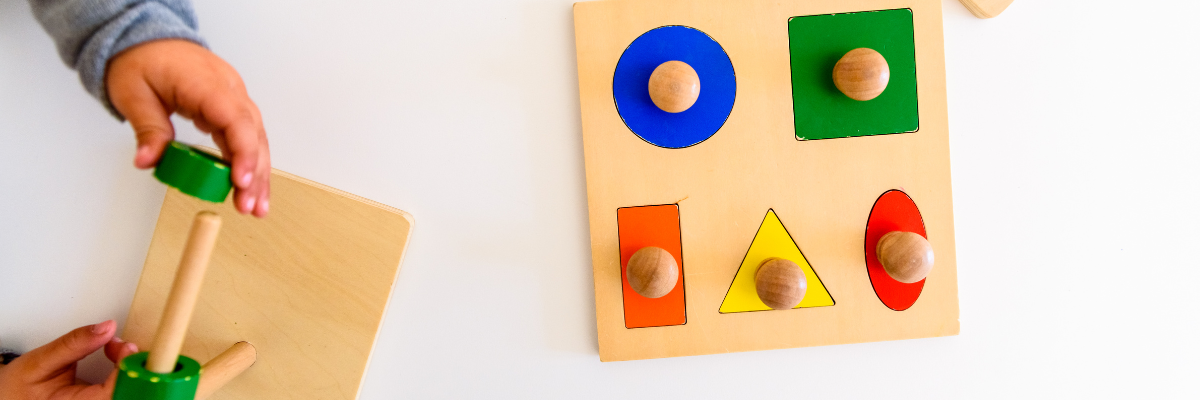
Puzzles are a fun, versatile learning tool for children. They can help children learn about shapes and colors, expand their vocabulary, and identify different types of animals. Puzzles also help children learn to act like put in and take out. You can add a multi-step direction to make a puzzle more challenging, like putting the cow and horse puzzle pieces together in their correct spot. For more engaging questions, ask your child, “What does a cow say?” or “Where is the cow?” Puzzle helps achieve milestones that involve enhancing visual perceptual skills, grasping technique, mastering multi-step directions, and developing problem-solving abilities. 


How can Carolina Therapy Connection Help? 

At CTC, we are committed to supporting our families and the child’s developmental journey and helping them achieve these goals at home. Please explore our website (https://www.carolinatherapyconnection.com/) or our Amazon Storefront (https://www.amazon.com/shop/carolinatherapyconnection). These are not your average toys; they are carefully innovative toys that can help foster growth and development. To further understand these toys’ impact, ask your therapist if you can sit in during a session. By watching the interaction between the child playing and the therapist, parents can gain insights into how effective these tools can be and bring these Not Your Average Toys into their home.


By: Lauren Hodges, COTA/L, and Allison Hicks